Select from topics on the page
REVIEW IMPORTANT SAFETY INFORMATION BELOW.


For BRCAm* aOC, 1L maintenance LYNPARZA following response to 1L platinum-based chemotherapy1

Not an actual patient.

SCROLL FOR ADDITIONAL INFORMATION
SEE THE STUDY DESIGN AND ADDITIONAL EFFICACY DATA, AND REVIEW IMPORTANT SAFETY INFORMATION FOR LYNPARZA.

Select from topics on the page
REVIEW IMPORTANT SAFETY INFORMATION BELOW.


*Select patients for this indication based on an FDA-approved companion diagnostic for LYNPARZA.1
Primary analysis
Estimated 60% progression-free survival at 3 years
Analysis based on Kaplan–Meier estimates. Study was not designed to detect a difference at the 3-year mark.
Median PFS1
HR=0.30 (95% CI: 0.23–0.41); P<0.0001
Median duration of follow-up (primary analysis): 41 months for both LYNPARZA and placebo; DCO: May 17, 2018.5
Events, n (%): 102/260 (39) with LYNPARZA and 96/131 (73) with placebo.1
Sensitivity analysis of PFS by BICR was consistent with the investigator-assessed PFS and confirmed the robustness of the data (HR=0.28 [95% CI: 0.20–0.39]).
BICR does not form part of the multiplicity strategy in SOLO-1.
LONG-TERM PFS DATA
PFS at the post hoc 5-year follow-up analysis
~4.7 years mPFS with LYNPARZA vs ~1.2 years with placebo6
The analyses at 1, 3, and 5 years are descriptive only; the SOLO-1 trial was not designed to assess a statistical difference between treatment groups at these time points.
| LYNPARZA | Placebo | |
|---|---|---|
| Median PFS (mo) | 56 | 13.8 |
| HR=0.33 (95% CI: 0.25–0.43) | ||
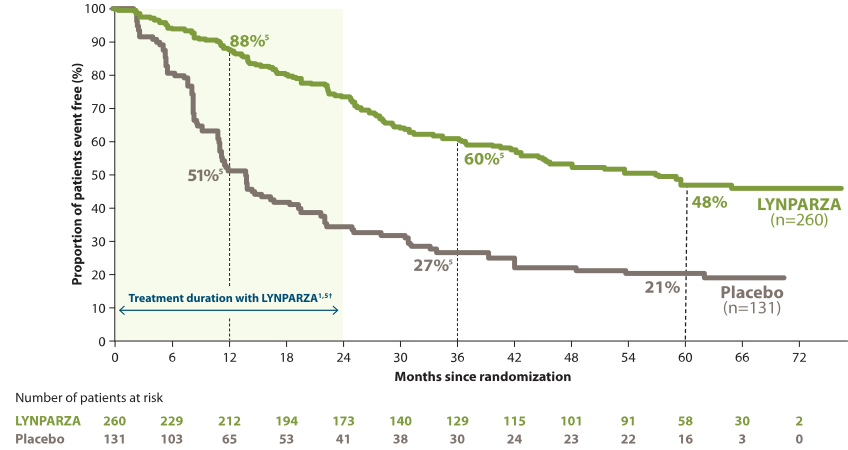
Events, n (%): 118/260 (45) with LYNPARZA and 100/131 (76) with placebo.5,6
†In SOLO-1, treatment with LYNPARZA was continued for up to 2 years or until disease progression or unacceptable toxicity. Patients who remained in CR received a maximum treatment duration of 2 years; patients with evidence of disease could continue to receive LYNPARZA beyond 2 years. 26 (10%) patients on LYNPARZA continued beyond 2 years. At the time of DCO May 17, 2018, 13 patients were still receiving LYNPARZA.1,5
OVERALL SURVIVAL DATA
Descriptive interim 7-year follow-up OS analysis
Median OS was not reached with LYNPARZA vs 75.2 months (~6.3 years) with placebo2
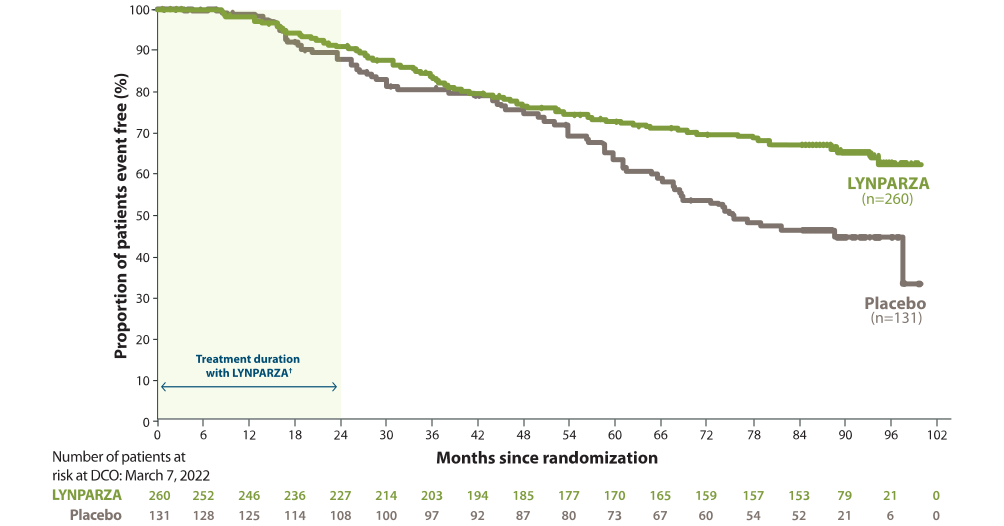
45%
reduction in risk of death
HR=0.55 (95% CI: 0.40–0.76)
Events, n (%): 84/260 (32.3) with LYNPARZA and 65/131 (49.6) with placebo.2
Interim median OS follow-up time: ~7.3 years (median duration of follow-up was 88.9 months for the olaparib arm and 87.4 months for placebo); DCO: March 7, 2022.2
This analysis is based on Kaplan–Meier estimates and is descriptive only.
†In SOLO-1, treatment with LYNPARZA was continued for up to 2 years or until disease progression or unacceptable toxicity. Patients who remained in CR received a maximum treatment duration of 2 years; patients with evidence of disease could continue to receive LYNPARZA beyond 2 years. 26 (10%) patients on LYNPARZA continued beyond 2 years. At the time of DCO May 17, 2018, 13 patients were still receiving LYNPARZA.1,5
SOLO-1 TRIAL DESIGN
SOLO-1: A phase 3 trial evaluating PFS as a primary endpoint and OS as a key secondary endpoint in BRCAm advanced ovarian cancer1,5
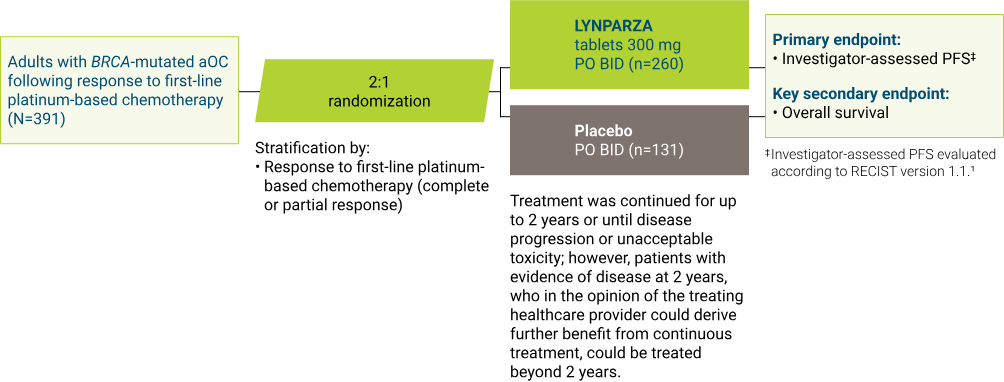
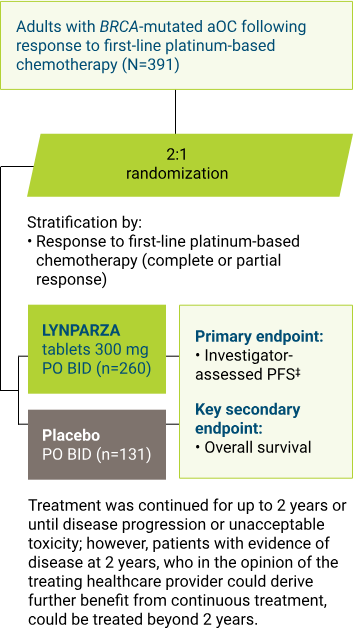
‡Investigator-assessed PFS evaluated according to RECIST version 1.1.1
ORR data
SOLO-1: BRCAm patients with residual disease after platinum-based therapy

LYNPARZA (n=54) | Placebo (n=26)
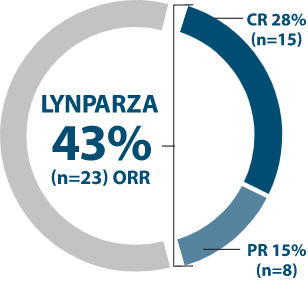
Over 1 in 4 patients
with residual disease experienced a conversion to a complete response with LYNPARZA
~1 in 7 patients
with residual disease experienced a conversion to a partial response with LYNPARZA
with residual disease experienced a conversion to a partial response with LYNPARZA
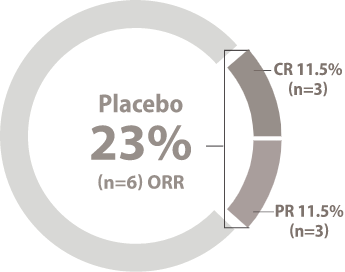
These post hoc analyses should be interpreted with caution because of the modest patient numbers and baseline imbalances. Patients were prospectively classified as responders if the RECIST criteria for a CR or PR were satisfied at any time, up to and including the defined analysis cutoff point. For each treatment group, the ORR was the number of CRs and PRs divided by the number of patients in the group in the full analysis set with measurable disease at baseline. Only patients with PR and measurable disease at enrollment could achieve an objective response of CR or PR. Although this analysis is defined as post hoc in the poster, the descriptive presentation of this data is described in version 1 of the protocol.8,9 Trial was not designed to assess statistical difference between treatment groups.5,8,9
EXPAND FOR INDICATIONS
See Important Safety Information, including Warnings and Precautions for MDS/AML, pneumonitis, venous thromboembolism, hepatotoxicity, including drug-induced liver injury, and embryo-fetal toxicity below.
INDICATIONS
LYNPARZA is a poly (ADP-ribose) polymerase (PARP) inhibitor indicated:
First-Line Maintenance BRCAm Advanced Ovarian Cancer
For the maintenance treatment of adult patients with deleterious or suspected deleterious germline or somatic BRCA-mutated (gBRCAm or sBRCAm) advanced epithelial ovarian, fallopian tube, or primary peritoneal cancer who are in complete or partial response to first-line platinum-based chemotherapy. Select patients for therapy based on an FDA-approved companion diagnostic for LYNPARZA.
First-Line Maintenance HRD-Positive Advanced Ovarian Cancer in Combination with Bevacizumab
In combination with bevacizumab for the maintenance treatment of adult patients with advanced epithelial ovarian, fallopian tube or primary peritoneal cancer who are in complete or partial response to first-line platinum-based chemotherapy and whose cancer is associated with homologous recombination deficiency (HRD)-positive status defined by either:
a deleterious or suspected deleterious BRCA mutation, and/or
genomic instability
Select patients for therapy based on an FDA-approved companion diagnostic for LYNPARZA.
Maintenance BRCA-mutated Recurrent Ovarian Cancer
For the maintenance treatment of adult patients with deleterious or suspected deleterious germline or somatic BRCA-mutated (gBRCAm or sBRCAm) recurrent epithelial ovarian, fallopian tube, or primary peritoneal cancer, who are in complete or partial response to platinum-based chemotherapy. Select patients for therapy based on an FDA-approved companion diagnostic for LYNPARZA.
Adjuvant Treatment of gBRCAm, HER2-Negative, High-Risk Early Breast Cancer
For the adjuvant treatment of adult patients with deleterious or suspected deleterious gBRCAm, human epidermal growth factor receptor 2 (HER2)-negative, high-risk early breast cancer who have been treated with neoadjuvant or adjuvant chemotherapy. Select patients for therapy based on an FDA-approved companion diagnostic for LYNPARZA.
gBRCAm, HER2-Negative Metastatic Breast Cancer
For the treatment of adult patients with deleterious or suspected deleterious gBRCAm, human epidermal growth factor receptor 2 (HER2)-negative metastatic breast cancer who have been treated with chemotherapy in the neoadjuvant, adjuvant, or metastatic setting. Patients with hormone receptor (HR)-positive breast cancer should have been treated with a prior endocrine therapy or be considered inappropriate for endocrine therapy. Select patients for therapy based on an FDA-approved companion diagnostic for LYNPARZA.
First-Line Maintenance gBRCAm Metastatic Pancreatic Cancer
For the maintenance treatment of adult patients with deleterious or suspected deleterious gBRCAm metastatic pancreatic adenocarcinoma whose disease has not progressed on at least 16 weeks of a first-line platinum-based chemotherapy regimen. Select patients for therapy based on an FDA-approved companion diagnostic for LYNPARZA.
HRR Gene-mutated Metastatic Castration-Resistant Prostate Cancer
For the treatment of adult patients with deleterious or suspected deleterious germline or somatic homologous recombination repair (HRR) gene-mutated metastatic castration-resistant prostate cancer (mCRPC) who have progressed following prior treatment with enzalutamide or abiraterone. Select patients for therapy based on an FDA-approved companion diagnostic for LYNPARZA.
BRCAm Metastatic Castration-Resistant Prostate Cancer in Combination with Abiraterone and Prednisone or Prednisolone
In combination with abiraterone and prednisone or prednisolone (abi/pred) for the treatment of adult patients with deleterious or suspected deleterious BRCA-mutated (BRCAm) metastatic castration-resistant prostate cancer (mCRPC). Select patients for therapy based on an FDA-approved companion diagnostic for LYNPARZA.
IMPORTANT SAFETY INFORMATION
CONTRAINDICATIONS
There are no contraindications for LYNPARZA.
WARNINGS AND PRECAUTIONS
Myelodysplastic Syndrome/Acute Myeloid Leukemia (MDS/AML): Occurred in approximately 1.2% of patients (26/2219) with various BRCAm, gBRCAm, HRR gene-mutated or HRD-positive cancers who received LYNPARZA in clinical studies as a single agent or as part of a combination regimen, consistent with the approved indications, and the majority of events had a fatal outcome. The median duration of therapy in patients who developed MDS/AML was approximately 2 years (range: <6 months to >4 years). All of these patients had previous chemotherapy with platinum agents and/or other DNA-damaging agents, including radiotherapy.
In SOLO-1, patients with newly diagnosed advanced BRCAm ovarian cancer, the incidence of MDS/AML was 1.9% (5/260) in patients who received LYNPARZA and 0.8% (1/130) in patients who received placebo based on an updated analysis. In PAOLA-1, of patients with newly diagnosed advanced ovarian cancer with HRD-positive status, the incidence of MDS/AML was 1.6% (4/255) in patients who received LYNPARZA and 2.3% (3/131) in the control arm.
In SOLO-2, patients with BRCAm platinum-sensitive relapsed ovarian cancer, the incidence of MDS/AML was 8% (15/195) in patients who received LYNPARZA and 4% (4/99) in patients who received placebo. The duration of LYNPARZA treatment prior to the diagnosis of MDS/AML ranged from 0.6 years to 4.5 years.
Do not start LYNPARZA until patients have recovered from hematological toxicity caused by previous chemotherapy (≤Grade 1). Monitor complete blood count for cytopenia at baseline and monthly thereafter for clinically significant changes during treatment. For prolonged hematological toxicities, interrupt LYNPARZA and monitor blood counts weekly until recovery. If the levels have not recovered to Grade 1 or less after 4 weeks, refer the patient to a hematologist for further investigations, including bone marrow analysis and blood sample for cytogenetics. Discontinue LYNPARZA if MDS/AML is confirmed.
Pneumonitis: Including severe and fatal cases, has occurred in patients treated with LYNPARZA. In clinical studies, among patients who received LYNPARZA as a single agent or as part of a combination regimen, the incidence of pneumonitis, including fatal cases, was 1.0% (29/2851). If patients present with new or worsening respiratory symptoms such as dyspnea, cough, and fever, or a radiological abnormality occurs, interrupt LYNPARZA treatment and promptly assess the source of the symptoms. If pneumonitis is confirmed, discontinue LYNPARZA treatment and treat the patient appropriately.
Venous Thromboembolism (VTE): Including severe or fatal pulmonary embolism (PE), occurred in patients treated with LYNPARZA. In the combined data of two randomized, placebo-controlled clinical studies (PROfound and PROpel) in patients with metastatic castration-resistant prostate cancer (N=1180), VTE occurred in 8% of patients who received LYNPARZA, including pulmonary embolism in 6%. In the control arms, VTE occurred in 2.5%, including pulmonary embolism in 1.5%. Monitor patients for signs and symptoms of venous thrombosis and pulmonary embolism, and treat as medically appropriate, which may include long-term anticoagulation as clinically indicated.
Hepatotoxicity, including Drug-Induced Liver Injury (DILI): Hepatotoxicity, including severe and potentially fatal cases of DILI has occurred in patients treated with LYNPARZA. Evaluate bilirubin and transaminases at baseline and throughout treatment with LYNPARZA. For patients who develop abnormal liver tests after LYNPARZA, monitor more frequently for liver test abnormalities and clinical signs and symptoms of hepatic toxicity. If DILI is suspected, withhold LYNPARZA. Upon confirmation of DILI, discontinue LYNPARZA.
Embryo-Fetal Toxicity: Based on its mechanism of action and findings in animals, LYNPARZA can cause fetal harm. Verify pregnancy status in females of reproductive potential prior to initiating treatment.
Females
Advise females of reproductive potential of the potential risk to a fetus and to use effective contraception during treatment and for 6 months following the last dose.
Males
Advise male patients with female partners of reproductive potential or who are pregnant to use effective contraception during treatment and for 3 months following the last dose of LYNPARZA and to not donate sperm during this time.
ADVERSE REACTIONS—First-Line Maintenance BRCAm Advanced Ovarian Cancer
Most common adverse reactions (all Grades) in ≥10% of patients who received LYNPARZA in the first-line maintenance setting for SOLO-1 were: nausea (77%), fatigue (67%), abdominal pain (45%), vomiting (40%), anemia (38%), diarrhea (37%), constipation (28%), upper respiratory tract infection/influenza/nasopharyngitis/bronchitis (28%), dysgeusia (26%), decreased appetite (20%), dizziness (20%), neutropenia (17%), dyspepsia (17%), dyspnea (15%), leukopenia (13%), urinary tract infection (13%), thrombocytopenia (11%), and stomatitis (11%).
Most common laboratory abnormalities (Grades 1-4) in ≥25% of patients who received LYNPARZA in the first-line maintenance setting for SOLO-1 were: decrease in hemoglobin (87%), increase in mean corpuscular volume (87%), decrease in leukocytes (70%), decrease in lymphocytes (67%), decrease in absolute neutrophil count (51%), decrease in platelets (35%), and increase in serum creatinine (34%).
ADVERSE REACTIONS—First-Line Maintenance Advanced Ovarian Cancer in Combination with Bevacizumab
Most common adverse reactions (Grades 1-4) in ≥10% of patients treated with LYNPARZA/bevacizumab and at a ≥5% frequency compared to placebo/bevacizumab in the first-line maintenance setting for PAOLA-1 were: nausea (53%), fatigue (including asthenia) (53%), anemia (41%), lymphopenia (24%), vomiting (22%), and leukopenia (18%). In addition, the most common adverse reactions (≥10%) for patients receiving LYNPARZA/bevacizumab irrespective of the frequency compared with the placebo/bevacizumab arm were: diarrhea (18%), neutropenia (18%), urinary tract infection (15%), and headache (14%).
In addition, venous thromboembolism occurred more commonly in patients receiving LYNPARZA/bevacizumab (5%) than in those receiving placebo/bevacizumab (1.9%).
Most common laboratory abnormalities (Grades 1-4) in ≥25% of patients for LYNPARZA in combination with bevacizumab in the first-line maintenance setting for PAOLA-1 were: decrease in hemoglobin (79%), decrease in lymphocytes (63%), increase in serum creatinine (61%), decrease in leukocytes (59%), decrease in absolute neutrophil count (35%), and decrease in platelets (35%).
ADVERSE REACTIONS—Maintenance gBRCAm Recurrent Ovarian Cancer
Most common adverse reactions (Grades 1-4) in ≥20% of patients who received LYNPARZA in the maintenance setting for SOLO-2 were: nausea (76%), fatigue (including asthenia) (66%), anemia (44%), vomiting (37%), nasopharyngitis/upper respiratory tract infection (URI)/sinusitis/rhinitis/influenza (36%), diarrhea (33%), arthralgia/myalgia (30%), dysgeusia (27%), headache (26%), decreased appetite (22%), and stomatitis (20%).
Most common laboratory abnormalities (Grades 1-4) in ≥25% of patients who received LYNPARZA in the maintenance setting for SOLO-2 were: increase in mean corpuscular volume (89%), decrease in hemoglobin (83%), decrease in leukocytes (69%), decrease in lymphocytes (67%), decrease in absolute neutrophil count (51%), increase in serum creatinine (44%), and decrease in platelets (42%).
ADVERSE REACTIONS—Adjuvant Treatment of gBRCAm, HER2-Negative, High-Risk Early Breast Cancer
Most common adverse reactions (Grades 1-4) in ≥10% of patients who received LYNPARZA in the adjuvant setting for OlympiA were: nausea (57%), fatigue (including asthenia) (42%), anemia (24%), vomiting (23%), headache (20%), diarrhea (18%), leukopenia (17%), neutropenia (16%), decreased appetite (13%), dysgeusia (12%), dizziness (11%), and stomatitis (10%).
Most common laboratory abnormalities (Grades 1-4) in ≥25% of patients who received LYNPARZA in the adjuvant setting for OlympiA were: decrease in lymphocytes (77%), increase in mean corpuscular volume (67%), decrease in hemoglobin (65%), decrease in leukocytes (64%), and decrease in absolute neutrophil count (39%).
ADVERSE REACTIONS—gBRCAm, HER2-Negative Metastatic Breast Cancer
Most common adverse reactions (Grades 1-4) in ≥20% of patients who received LYNPARZA in the metastatic setting for OlympiAD were: nausea (58%), anemia (40%), fatigue (including asthenia) (37%), vomiting (30%), neutropenia (27%), respiratory tract infection (27%), leukopenia (25%), diarrhea (21%), and headache (20%).
Most common laboratory abnormalities (Grades 1-4) in ≥25% of patients who received LYNPARZA in the metastatic setting for OlympiAD were: decrease in hemoglobin (82%), decrease in lymphocytes (73%), decrease in leukocytes (71%), increase in mean corpuscular volume (71%), decrease in absolute neutrophil count (46%), and decrease in platelets (33%).
ADVERSE REACTIONS—First-Line Maintenance gBRCAm Metastatic Pancreatic Adenocarcinoma
Most common adverse reactions (all Grades) in ≥10% of patients who received LYNPARZA in the first-line maintenance setting for POLO were: fatigue (60%), nausea (45%), abdominal pain (34%), diarrhea (29%), anemia (27%), decreased appetite (25%), constipation (23%), vomiting (20%), back pain (19%), arthralgia (15%), rash (15%), thrombocytopenia (14%), dyspnea (13%), neutropenia (12%), nasopharyngitis (12%), dysgeusia (11%), and stomatitis (10%).
Most common laboratory abnormalities (Grades 1-4) in ≥25% of patients who received LYNPARZA in the first-line maintenance setting for POLO were: increase in serum creatinine (99%), decrease in hemoglobin (86%), increase in mean corpuscular volume (71%), decrease in lymphocytes (61%), decrease in platelets (56%), decrease in leukocytes (50%), and decrease in absolute neutrophil count (25%).
ADVERSE REACTIONS—HRR Gene-mutated Metastatic Castration-Resistant Prostate Cancer
Most common adverse reactions (Grades 1-4) in ≥10% of patients who received LYNPARZA for PROfound were: anemia (46%), fatigue (including asthenia) (41%), nausea (41%), decreased appetite (30%), diarrhea (21%), vomiting (18%), thrombocytopenia (12%), cough (11%), and dyspnea (10%).
Most common laboratory abnormalities (Grades 1-4) in ≥25% of patients who received LYNPARZA for PROfound were: decrease in hemoglobin (98%), decrease in lymphocytes (62%), decrease in leukocytes (53%), and decrease in absolute neutrophil count (34%).
ADVERSE REACTIONS—Metastatic Castration-Resistant Prostate Cancer in Combination with Abiraterone and Prednisone or Prednisolone
Most common adverse reactions (Grades 1-4) in ≥10% of patients who received LYNPARZA/abiraterone with a difference of ≥5% compared to placebo/abiraterone for PROpel were: anemia (48%), fatigue (including asthenia) (38%), nausea (30%), diarrhea (19%), decreased appetite (16%), lymphopenia (14%), dizziness (14%), and abdominal pain (13%).
Most common laboratory abnormalities (Grades 1-4) in ≥20% of patients who received LYNPARZA/abiraterone for PROpel were: decrease in hemoglobin (97%), decrease in lymphocytes (70%), decrease in platelets (23%), and decrease in absolute neutrophil count (23%).
DRUG INTERACTIONS
Anticancer Agents: Clinical studies of LYNPARZA with other myelosuppressive anticancer agents, including DNA-damaging agents, indicate a potentiation and prolongation of myelosuppressive toxicity.
CYP3A Inhibitors: Avoid coadministration of strong or moderate CYP3A inhibitors when using LYNPARZA. If a strong or moderate CYP3A inhibitor must be coadministered, reduce the dose of LYNPARZA. Advise patients to avoid grapefruit, grapefruit juice, Seville oranges, and Seville orange juice during LYNPARZA treatment.
CYP3A Inducers: Avoid coadministration of strong or moderate CYP3A inducers when using LYNPARZA.
USE IN SPECIFIC POPULATIONS
Lactation: No data are available regarding the presence of olaparib in human milk, its effects on the breastfed infant or on milk production. Because of the potential for serious adverse reactions in the breastfed infant, advise a lactating woman not to breastfeed during treatment with LYNPARZA and for 1 month after receiving the final dose.
Pediatric Use: The safety and efficacy of LYNPARZA have not been established in pediatric patients.
Hepatic Impairment: No adjustment to the starting dose is required in patients with mild or moderate hepatic impairment (Child-Pugh classification A and B). There are no data in patients with severe hepatic impairment (Child-Pugh classification C).
Renal Impairment: No dosage modification is recommended in patients with mild renal impairment (CLcr 51-80 mL/min estimated by Cockcroft-Gault). In patients with moderate renal impairment (CLcr 31-50 mL/min), reduce the dose of LYNPARZA to 200 mg twice daily. There are no data in patients with severe renal impairment or end-stage renal disease (CLcr ≤30 mL/min).
Please see complete Prescribing Information, including Medication Guide.
You may report side effects related to AstraZeneca products .
IMPORTANT SAFETY INFORMATION
See Important Safety Information, including Warnings and Precautions for MDS/AML, pneumonitis, venous thromboembolism, hepatotoxicity, including drug-induced liver injury, and embryo-fetal toxicity below.
INDICATIONS
LYNPARZA is a poly (ADP-ribose) polymerase (PARP) inhibitor indicated:
First-Line Maintenance BRCAm Advanced Ovarian Cancer
For the maintenance treatment of adult patients with deleterious or suspected deleterious germline or somatic BRCA-mutated (gBRCAm or sBRCAm) advanced epithelial ovarian, fallopian tube, or primary peritoneal cancer who are in complete or partial response to first-line platinum-based chemotherapy. Select patients for therapy based on an FDA-approved companion diagnostic for LYNPARZA.
First-Line Maintenance HRD-Positive Advanced Ovarian Cancer in Combination with Bevacizumab
In combination with bevacizumab for the maintenance treatment of adult patients with advanced epithelial ovarian, fallopian tube or primary peritoneal cancer who are in complete or partial response to first-line platinum-based chemotherapy and whose cancer is associated with homologous recombination deficiency (HRD)-positive status defined by either:
a deleterious or suspected deleterious BRCA mutation, and/or
genomic instability
Select patients for therapy based on an FDA-approved companion diagnostic for LYNPARZA.
Maintenance BRCA-mutated Recurrent Ovarian Cancer
For the maintenance treatment of adult patients with deleterious or suspected deleterious germline or somatic BRCA-mutated (gBRCAm or sBRCAm) recurrent epithelial ovarian, fallopian tube, or primary peritoneal cancer, who are in complete or partial response to platinum-based chemotherapy. Select patients for therapy based on an FDA-approved companion diagnostic for LYNPARZA.
Adjuvant Treatment of gBRCAm, HER2-Negative, High-Risk Early Breast Cancer
For the adjuvant treatment of adult patients with deleterious or suspected deleterious gBRCAm, human epidermal growth factor receptor 2 (HER2)-negative, high-risk early breast cancer who have been treated with neoadjuvant or adjuvant chemotherapy. Select patients for therapy based on an FDA-approved companion diagnostic for LYNPARZA.
gBRCAm, HER2-Negative Metastatic Breast Cancer
For the treatment of adult patients with deleterious or suspected deleterious gBRCAm, human epidermal growth factor receptor 2 (HER2)-negative metastatic breast cancer who have been treated with chemotherapy in the neoadjuvant, adjuvant, or metastatic setting. Patients with hormone receptor (HR)-positive breast cancer should have been treated with a prior endocrine therapy or be considered inappropriate for endocrine therapy. Select patients for therapy based on an FDA-approved companion diagnostic for LYNPARZA.
First-Line Maintenance gBRCAm Metastatic Pancreatic Cancer
For the maintenance treatment of adult patients with deleterious or suspected deleterious gBRCAm metastatic pancreatic adenocarcinoma whose disease has not progressed on at least 16 weeks of a first-line platinum-based chemotherapy regimen. Select patients for therapy based on an FDA-approved companion diagnostic for LYNPARZA.
HRR Gene-mutated Metastatic Castration-Resistant Prostate Cancer
For the treatment of adult patients with deleterious or suspected deleterious germline or somatic homologous recombination repair (HRR) gene-mutated metastatic castration-resistant prostate cancer (mCRPC) who have progressed following prior treatment with enzalutamide or abiraterone. Select patients for therapy based on an FDA-approved companion diagnostic for LYNPARZA.
BRCAm Metastatic Castration-Resistant Prostate Cancer in Combination with Abiraterone and Prednisone or Prednisolone
In combination with abiraterone and prednisone or prednisolone (abi/pred) for the treatment of adult patients with deleterious or suspected deleterious BRCA-mutated (BRCAm) metastatic castration-resistant prostate cancer (mCRPC). Select patients for therapy based on an FDA-approved companion diagnostic for LYNPARZA.
IMPORTANT SAFETY INFORMATION
CONTRAINDICATIONS
There are no contraindications for LYNPARZA.
WARNINGS AND PRECAUTIONS
Myelodysplastic Syndrome/Acute Myeloid Leukemia (MDS/AML): Occurred in approximately 1.2% of patients (26/2219) with various BRCAm, gBRCAm, HRR gene-mutated or HRD-positive cancers who received LYNPARZA in clinical studies as a single agent or as part of a combination regimen, consistent with the approved indications, and the majority of events had a fatal outcome. The median duration of therapy in patients who developed MDS/AML was approximately 2 years (range: <6 months to >4 years). All of these patients had previous chemotherapy with platinum agents and/or other DNA-damaging agents, including radiotherapy.
In SOLO-1, patients with newly diagnosed advanced BRCAm ovarian cancer, the incidence of MDS/AML was 1.9% (5/260) in patients who received LYNPARZA and 0.8% (1/130) in patients who received placebo based on an updated analysis. In PAOLA-1, of patients with newly diagnosed advanced ovarian cancer with HRD-positive status, the incidence of MDS/AML was 1.6% (4/255) in patients who received LYNPARZA and 2.3% (3/131) in the control arm.
In SOLO-2, patients with BRCAm platinum-sensitive relapsed ovarian cancer, the incidence of MDS/AML was 8% (15/195) in patients who received LYNPARZA and 4% (4/99) in patients who received placebo. The duration of LYNPARZA treatment prior to the diagnosis of MDS/AML ranged from 0.6 years to 4.5 years.
Do not start LYNPARZA until patients have recovered from hematological toxicity caused by previous chemotherapy (≤Grade 1). Monitor complete blood count for cytopenia at baseline and monthly thereafter for clinically significant changes during treatment. For prolonged hematological toxicities, interrupt LYNPARZA and monitor blood counts weekly until recovery. If the levels have not recovered to Grade 1 or less after 4 weeks, refer the patient to a hematologist for further investigations, including bone marrow analysis and blood sample for cytogenetics. Discontinue LYNPARZA if MDS/AML is confirmed.
Pneumonitis: Including severe and fatal cases, has occurred in patients treated with LYNPARZA. In clinical studies, among patients who received LYNPARZA as a single agent or as part of a combination regimen, the incidence of pneumonitis, including fatal cases, was 1.0% (29/2851). If patients present with new or worsening respiratory symptoms such as dyspnea, cough, and fever, or a radiological abnormality occurs, interrupt LYNPARZA treatment and promptly assess the source of the symptoms. If pneumonitis is confirmed, discontinue LYNPARZA treatment and treat the patient appropriately.
Venous Thromboembolism (VTE): Including severe or fatal pulmonary embolism (PE), occurred in patients treated with LYNPARZA. In the combined data of two randomized, placebo-controlled clinical studies (PROfound and PROpel) in patients with metastatic castration-resistant prostate cancer (N=1180), VTE occurred in 8% of patients who received LYNPARZA, including pulmonary embolism in 6%. In the control arms, VTE occurred in 2.5%, including pulmonary embolism in 1.5%. Monitor patients for signs and symptoms of venous thrombosis and pulmonary embolism, and treat as medically appropriate, which may include long-term anticoagulation as clinically indicated.
Hepatotoxicity, including Drug-Induced Liver Injury (DILI): Hepatotoxicity, including severe and potentially fatal cases of DILI has occurred in patients treated with LYNPARZA. Evaluate bilirubin and transaminases at baseline and throughout treatment with LYNPARZA. For patients who develop abnormal liver tests after LYNPARZA, monitor more frequently for liver test abnormalities and clinical signs and symptoms of hepatic toxicity. If DILI is suspected, withhold LYNPARZA. Upon confirmation of DILI, discontinue LYNPARZA.
Embryo-Fetal Toxicity: Based on its mechanism of action and findings in animals, LYNPARZA can cause fetal harm. Verify pregnancy status in females of reproductive potential prior to initiating treatment.
Females
Advise females of reproductive potential of the potential risk to a fetus and to use effective contraception during treatment and for 6 months following the last dose.
Males
Advise male patients with female partners of reproductive potential or who are pregnant to use effective contraception during treatment and for 3 months following the last dose of LYNPARZA and to not donate sperm during this time.
ADVERSE REACTIONS—First-Line Maintenance BRCAm Advanced Ovarian Cancer
Most common adverse reactions (all Grades) in ≥10% of patients who received LYNPARZA in the first-line maintenance setting for SOLO-1 were: nausea (77%), fatigue (67%), abdominal pain (45%), vomiting (40%), anemia (38%), diarrhea (37%), constipation (28%), upper respiratory tract infection/influenza/nasopharyngitis/bronchitis (28%), dysgeusia (26%), decreased appetite (20%), dizziness (20%), neutropenia (17%), dyspepsia (17%), dyspnea (15%), leukopenia (13%), urinary tract infection (13%), thrombocytopenia (11%), and stomatitis (11%).
Most common laboratory abnormalities (Grades 1-4) in ≥25% of patients who received LYNPARZA in the first-line maintenance setting for SOLO-1 were: decrease in hemoglobin (87%), increase in mean corpuscular volume (87%), decrease in leukocytes (70%), decrease in lymphocytes (67%), decrease in absolute neutrophil count (51%), decrease in platelets (35%), and increase in serum creatinine (34%).
ADVERSE REACTIONS—First-Line Maintenance Advanced Ovarian Cancer in Combination with Bevacizumab
Most common adverse reactions (Grades 1-4) in ≥10% of patients treated with LYNPARZA/bevacizumab and at a ≥5% frequency compared to placebo/bevacizumab in the first-line maintenance setting for PAOLA-1 were: nausea (53%), fatigue (including asthenia) (53%), anemia (41%), lymphopenia (24%), vomiting (22%), and leukopenia (18%). In addition, the most common adverse reactions (≥10%) for patients receiving LYNPARZA/bevacizumab irrespective of the frequency compared with the placebo/bevacizumab arm were: diarrhea (18%), neutropenia (18%), urinary tract infection (15%), and headache (14%).
In addition, venous thromboembolism occurred more commonly in patients receiving LYNPARZA/bevacizumab (5%) than in those receiving placebo/bevacizumab (1.9%).
Most common laboratory abnormalities (Grades 1-4) in ≥25% of patients for LYNPARZA in combination with bevacizumab in the first-line maintenance setting for PAOLA-1 were: decrease in hemoglobin (79%), decrease in lymphocytes (63%), increase in serum creatinine (61%), decrease in leukocytes (59%), decrease in absolute neutrophil count (35%), and decrease in platelets (35%).
ADVERSE REACTIONS—Maintenance gBRCAm Recurrent Ovarian Cancer
Most common adverse reactions (Grades 1-4) in ≥20% of patients who received LYNPARZA in the maintenance setting for SOLO-2 were: nausea (76%), fatigue (including asthenia) (66%), anemia (44%), vomiting (37%), nasopharyngitis/upper respiratory tract infection (URI)/sinusitis/rhinitis/influenza (36%), diarrhea (33%), arthralgia/myalgia (30%), dysgeusia (27%), headache (26%), decreased appetite (22%), and stomatitis (20%).
Most common laboratory abnormalities (Grades 1-4) in ≥25% of patients who received LYNPARZA in the maintenance setting for SOLO-2 were: increase in mean corpuscular volume (89%), decrease in hemoglobin (83%), decrease in leukocytes (69%), decrease in lymphocytes (67%), decrease in absolute neutrophil count (51%), increase in serum creatinine (44%), and decrease in platelets (42%).
ADVERSE REACTIONS—Adjuvant Treatment of gBRCAm, HER2-Negative, High-Risk Early Breast Cancer
Most common adverse reactions (Grades 1-4) in ≥10% of patients who received LYNPARZA in the adjuvant setting for OlympiA were: nausea (57%), fatigue (including asthenia) (42%), anemia (24%), vomiting (23%), headache (20%), diarrhea (18%), leukopenia (17%), neutropenia (16%), decreased appetite (13%), dysgeusia (12%), dizziness (11%), and stomatitis (10%).
Most common laboratory abnormalities (Grades 1-4) in ≥25% of patients who received LYNPARZA in the adjuvant setting for OlympiA were: decrease in lymphocytes (77%), increase in mean corpuscular volume (67%), decrease in hemoglobin (65%), decrease in leukocytes (64%), and decrease in absolute neutrophil count (39%).
ADVERSE REACTIONS—gBRCAm, HER2-Negative Metastatic Breast Cancer
Most common adverse reactions (Grades 1-4) in ≥20% of patients who received LYNPARZA in the metastatic setting for OlympiAD were: nausea (58%), anemia (40%), fatigue (including asthenia) (37%), vomiting (30%), neutropenia (27%), respiratory tract infection (27%), leukopenia (25%), diarrhea (21%), and headache (20%).
Most common laboratory abnormalities (Grades 1-4) in ≥25% of patients who received LYNPARZA in the metastatic setting for OlympiAD were: decrease in hemoglobin (82%), decrease in lymphocytes (73%), decrease in leukocytes (71%), increase in mean corpuscular volume (71%), decrease in absolute neutrophil count (46%), and decrease in platelets (33%).
ADVERSE REACTIONS—First-Line Maintenance gBRCAm Metastatic Pancreatic Adenocarcinoma
Most common adverse reactions (all Grades) in ≥10% of patients who received LYNPARZA in the first-line maintenance setting for POLO were: fatigue (60%), nausea (45%), abdominal pain (34%), diarrhea (29%), anemia (27%), decreased appetite (25%), constipation (23%), vomiting (20%), back pain (19%), arthralgia (15%), rash (15%), thrombocytopenia (14%), dyspnea (13%), neutropenia (12%), nasopharyngitis (12%), dysgeusia (11%), and stomatitis (10%).
Most common laboratory abnormalities (Grades 1-4) in ≥25% of patients who received LYNPARZA in the first-line maintenance setting for POLO were: increase in serum creatinine (99%), decrease in hemoglobin (86%), increase in mean corpuscular volume (71%), decrease in lymphocytes (61%), decrease in platelets (56%), decrease in leukocytes (50%), and decrease in absolute neutrophil count (25%).
ADVERSE REACTIONS—HRR Gene-mutated Metastatic Castration-Resistant Prostate Cancer
Most common adverse reactions (Grades 1-4) in ≥10% of patients who received LYNPARZA for PROfound were: anemia (46%), fatigue (including asthenia) (41%), nausea (41%), decreased appetite (30%), diarrhea (21%), vomiting (18%), thrombocytopenia (12%), cough (11%), and dyspnea (10%).
Most common laboratory abnormalities (Grades 1-4) in ≥25% of patients who received LYNPARZA for PROfound were: decrease in hemoglobin (98%), decrease in lymphocytes (62%), decrease in leukocytes (53%), and decrease in absolute neutrophil count (34%).
ADVERSE REACTIONS—Metastatic Castration-Resistant Prostate Cancer in Combination with Abiraterone and Prednisone or Prednisolone
Most common adverse reactions (Grades 1-4) in ≥10% of patients who received LYNPARZA/abiraterone with a difference of ≥5% compared to placebo/abiraterone for PROpel were: anemia (48%), fatigue (including asthenia) (38%), nausea (30%), diarrhea (19%), decreased appetite (16%), lymphopenia (14%), dizziness (14%), and abdominal pain (13%).
Most common laboratory abnormalities (Grades 1-4) in ≥20% of patients who received LYNPARZA/abiraterone for PROpel were: decrease in hemoglobin (97%), decrease in lymphocytes (70%), decrease in platelets (23%), and decrease in absolute neutrophil count (23%).
DRUG INTERACTIONS
Anticancer Agents: Clinical studies of LYNPARZA with other myelosuppressive anticancer agents, including DNA-damaging agents, indicate a potentiation and prolongation of myelosuppressive toxicity.
CYP3A Inhibitors: Avoid coadministration of strong or moderate CYP3A inhibitors when using LYNPARZA. If a strong or moderate CYP3A inhibitor must be coadministered, reduce the dose of LYNPARZA. Advise patients to avoid grapefruit, grapefruit juice, Seville oranges, and Seville orange juice during LYNPARZA treatment.
CYP3A Inducers: Avoid coadministration of strong or moderate CYP3A inducers when using LYNPARZA.
USE IN SPECIFIC POPULATIONS
Lactation: No data are available regarding the presence of olaparib in human milk, its effects on the breastfed infant or on milk production. Because of the potential for serious adverse reactions in the breastfed infant, advise a lactating woman not to breastfeed during treatment with LYNPARZA and for 1 month after receiving the final dose.
Pediatric Use: The safety and efficacy of LYNPARZA have not been established in pediatric patients.
Hepatic Impairment: No adjustment to the starting dose is required in patients with mild or moderate hepatic impairment (Child-Pugh classification A and B). There are no data in patients with severe hepatic impairment (Child-Pugh classification C).
Renal Impairment: No dosage modification is recommended in patients with mild renal impairment (CLcr 51-80 mL/min estimated by Cockcroft-Gault). In patients with moderate renal impairment (CLcr 31-50 mL/min), reduce the dose of LYNPARZA to 200 mg twice daily. There are no data in patients with severe renal impairment or end-stage renal disease (CLcr ≤30 mL/min).
Please see complete Prescribing Information, including Medication Guide.
You may report side effects related to AstraZeneca products .
1L=first-line; 1LM=first-line maintenance; aOC=advanced ovarian cancer; BICR=blinded independent central review; BID=twice daily; BRCAm=BRCA-mutated or BRCA mutation(s); CI=confidence interval; CR=complete response; DCO=data cutoff; gBRCAm=germline BRCA-mutated; HR=hazard ratio; mPFS=median PFS; NR=not reached; ORR=objective response rate; OS=overall survival; PFS=progression-free survival; PR=partial response; RECIST=Response Evaluation Criteria in Solid Tumors; sBRCAm=somatic BRCA-mutated.
References: 1. LYNPARZA® (olaparib) [prescribing information]. Wilmington, DE: AstraZeneca Pharmaceuticals LP; 2025. 2. DiSilvestro P, Banerjee S, Colombo N, et al. Overall survival with maintenance olaparib at a 7-year follow-up in patients with newly diagnosed advanced ovarian cancer and a BRCA mutation: the SOLO1/GOG 3004 trial. J Clin Oncol. 2023;41(3):609-617. 3. Monk BJ, Barretina-Ginesta MP, Pothuri B, et al. Niraparib first-line maintenance therapy in patients with newly diagnosed advanced ovarian cancer: final overall survival results from the PRIMA/ENGOT-OV26/GOG-3012 trial. Ann Oncol. 2024;35(11):981-992. doi.org/10.1016/j.annonc.2024.08.2241 4. Monk BJ, Parkinson C, Lim MC, et al. A randomized, phase III trial to evaluate rucaparib monotherapy as maintenance treatment in patients with newly diagnosed ovarian cancer (ATHENA–MONO/GOG-3020/ENGOT-ov45). J Clin Oncol. 2022;40(34):3952-3964. 5. Moore K, Colombo N, Scambia G, et al. Maintenance olaparib in patients with newly diagnosed advanced ovarian cancer. N Engl J Med. 2018;379(26):2495-2505. 6. Banerjee S, Moore KN, Colombo N, et al. Maintenance olaparib for patients with newly diagnosed advanced ovarian cancer and a BRCA mutation (SOLO1/GOG 3004): 5-year follow-up of a randomised, double-blind, placebo-controlled, phase 3 trial. Lancet Oncol. 2021;22(12):1721-1731. 7. Moore K, Colombo N, Scambia G, et al. Maintenance olaparib in patients with newly diagnosed advanced ovarian cancer. SOLO-1 Protocol. N Engl J Med. 2018;379(26):2495-2505. 8. Mathews C, Moore K, Colombo N, et al. Maintenance olaparib after platinum-based chemotherapy in patients with newly diagnosed advanced ovarian cancer and a BRCA mutation: efficacy by surgical and tumor status in the phase III SOLO1 trial. Poster presented at: 2019 ASCO Annual Meeting; May 31-June 4, 2019; Chicago, IL. 9. SOLO-1 Clinical Study Protocol. Study Code D0818C0001. Edition Number 1. April 19, 2013.