

Ovarian cancer videos and resources for HCPs
 Resources on this page
LYNPARZA ovarian cancer videos


Dr Sharyn N. Lewin Discusses the PAOLA-1 Clinical Trial Results
In this video, Dr Sharyn N. Lewin, a leading gynecologic oncologist, discusses key data for LYNPARZA® (olaparib) + bevacizumab from the PAOLA-1 study, including the prespecified 5-year follow-up PFS and OS analyses, and post hoc exploratory subgroup analyses of PFS and OS by clinical risk.
Please see Important Safety Information for LYNPARZA within the video and below.
[Light music fades in with visual]
LYNPARZA is indicated in combination with bevacizumab for the maintenance treatment of adult patients with advanced epithelial ovarian, fallopian tube or primary peritoneal cancer who are in complete or partial response to first-line platinum-based chemotherapy and whose cancer is associated with homologous recombination deficiency (HRD)-positive status defined by either a deleterious or suspected deleterious BRCA mutation, and/or genomic instability. Select patients for therapy based on an FDA-approved companion diagnostic for LYNPARZA
Select Safety Information
- Serious and potentially fatal adverse events included:
- Myelodysplastic syndrome/acute myeloid leukemia (MDS/AML): Monitor patients for hematological toxicity at baseline and monthly thereafter. Discontinue if MDS/AML is confirmed
- Pneumonitis: Interrupt treatment if pneumonitis is suspected. Discontinue if pneumonitis is confirmed
- Venous thromboembolism (VTE): Including severe or fatal pulmonary embolism (PE). Monitor patients for signs and symptoms of venous thrombosis and PE, and treat as medically appropriate
- Hepatotoxicity, including drug-induced liver injury (DILI): Evaluate bilirubin and transaminases at baseline and throughout treatment with LYNPARZA. For patients who develop abnormal liver tests after LYNPARZA, monitor more frequently for liver test abnormalities and clinical signs and symptoms of hepatic toxicity. If DILI is suspected, interrupt LYNPARZA. If DILI is confirmed, discontinue treatment
- Advise patients of the potential risk of embryo-fetal toxicity and to use effective contraception
- Most common adverse reactions (≥10%) in clinical trials:
- in combination with bevacizumab were nausea, fatigue (including asthenia), anemia, lymphopenia, vomiting, diarrhea, neutropenia, leukopenia, urinary tract infection, and headache
Please see Important Safety Information later in this video
Hello, I’m Dr Sharyn Lewin, Director of Gynecologic Oncology at Holy Name in Teaneck, New Jersey. I’m also an Assistant Clinical Professor in the Icahn School of Medicine at Mount Sinai Hospital, New York, New York
During the time that we’re together today, we will review the primary analysis from the PAOLA-1 trial, data from the 5-year follow-up overall survival analysis, as well as a post hoc exploratory subgroup analysis of PFS by higher and lower clinical risk in HRD-positive patients
PAOLA-1 was a registration trial that was designed to meet an important unmet need
Key eligibility criteria included women with Stage 3 or 4 advanced ovarian, primary peritoneal, or fallopian tube cancers regardless of BRCA mutation status; so really all-comers were enrolled. Women could have had either upfront surgery followed by adjuvant chemotherapy or neoadjuvant chemotherapy followed by an interval surgery. They had to have at least three cycles of bevacizumab in combination with platinum-based chemotherapy
If they had at least a partial response, they were then randomized in a two-to-one fashion to maintenance therapy with either bevacizumab in combination with LYNPARZA or bevacizumab alone. So, this trial unlike the other PARP trials in ovarian cancer, has an active comparator arm, bevacizumab, which was continued for up to 15 months. This included the time given with chemotherapy and as maintenance at the standard dose of 15 mg/kg
In the experimental arm, LYNPARZA was given at 300 mg twice a day for up to 2 years or until disease progression or unacceptable toxicity. The primary endpoint was investigator-assessed progression-free survival. Overall survival was a key secondary endpoint, and a prespecified exploratory analysis looked at PFS in predefined subgroups including those with HRD and BRCA mutation status. PFS in HRD-positive patients served as the basis for the FDA-approved indication
We saw in the PAOLA-1 trial that about half of the participants had HRD, so essentially the biomarker status that we saw in PAOLA-1 really mirrors what we see in real-world practice
HRD was measured by a companion diagnostic, Myriad’s MyChoice CDx. Their genomic instability score measures loss of heterozygosity, telomeric allelic imbalance, and large-scale state transitions
Now let’s look at the initial data from the primary analysis before we talk about the prespecified 5-year follow-up in the HRD-positive patients
As you can see from the top line in green, the median PFS with the combination of LYNPARZA plus bevacizumab in the primary analysis was 37.2 months versus 17.7 months with bevacizumab alone. Here the hazard ratio was 0.33 so a 67 percent reduction in progression or death by having a combination of LYNPARZA plus bevacizumab versus bevacizumab alone
Here you can see the Kaplan–Meier curve from the 5-year follow-up data in these HRD-positive patients. The median PFS with the combination of LYNPARZA plus bevacizumab was 46.8 months, or almost four years compared to the bevacizumab-only arm, in which the median PFS was 17.6 months, or almost 1.5 years
Here the hazard ratio was 0.41 so essentially a 59 percent risk reduction in progression or death by having LYNPARZA plus bevacizumab versus bevacizumab alone. At five years, approximately half of those women with HRD were progression-free with the combination of LYNPARZA plus bevacizumab versus only approximately 19 percent with bevacizumab alone. Data were not powered to detect a statistical difference
Next, let’s look at the overall survival data in these patients
In the prespecified 5-year follow-up overall survival analysis in HRD-positive patients, at 5 years nearly 66 percent of patients were estimated to be alive with the combination of LYNPARZA plus bevacizumab versus only about 48 percent with bevacizumab alone
You can see here the median overall survival with the combination was 75.2 months or about 6.3 years and in the bevacizumab-only arm this was 57.3 months or about 4.8 years
Of note, this analysis was not powered to detect a statistical difference
This is a post hoc exploratory subgroup analysis of progression-free survival by clinical risk for relapse in HRD-positive patients. These are women with Stage 3 disease who had upfront surgery and had residual disease or received neoadjuvant chemotherapy or Stage 4 patients
There is no official clinical consensus on what is considered higher versus lower risk. Data are based on post hoc exploratory subgroup analyses in 2 clinical subgroups, higher-risk and lower-risk, including biomarker status. Neither HRD status nor risk factor was a stratification factor in PAOLA-1
The lower-risk patients are those with Stage 3 disease that underwent upfront surgery and were completely resected. Those women as we know fall into a sort of better prognostic group than the highest-risk patients
–The median PFS in the LYNPARZA plus bevacizumab arm has not yet been reached. And, if you look at the Kaplan-Meier curve, LYNPARZA plus bevacizumab at the two-year mark, ninety percent of the lower-risk patients were progression-free at 2 years.
–Whereas with bevacizumab alone, the median PFS here is 22 months and only 43 percent of patients are progression-free at the 24-month mark. So there was a hazard ratio of 0.15, an 85-percent risk reduction in progression or death by having the combination of LYNPARZA plus bevacizumab versus bevacizumab alone
The median PFS in these highest-risk patients was about 36 months with a combination of LYNPARZA plus bevacizumab versus about 16 months in the group that was treated with bevacizumab alone
Here, the hazard ratio was 0.39, almost a 61 percent risk reduction in progression or death by having the combination of LYNPARZA plus bevacizumab versus bevacizumab alone
Here are the data for the 5-year follow-up, post hoc exploratory subgroup analysis of overall survival by clinical risk for relapse in HRD-positive patients
Again, there is no official clinical consensus on what is considered higher versus lower risk, and neither HRD status nor risk factor was a stratification factor in PAOLA-1
The median OS in the LYNPARZA plus bevacizumab arm and the bevacizumab alone arm are not evaluable, with a hazard ratio of 0.31, so a nearly 70% risk reduction
Looking at the 5-year mark, 88.3% of patients were estimated to be alive with LYNPARZA plus bevacizumab, and 61.3% were estimated to be alive with bevacizumab alone
You can see that the median OS in these higher-risk patients was 67 months with the combination of LYNPARZA plus bevacizumab versus 54 months with bevacizumab alone. The median for LYNPARZA + bevacizumab is unstable due to a lack of events. Here, the hazard ratio was 0.70, so about a 30 percent risk reduction with the combination of LYNPARZA plus bevacizumab versus bevacizumab alone
Here we have the adverse reactions reported in 10 percent or more of women with LYNPARZA and bevacizumab and 5% or more in those that received bevacizumab alone
So, as you can see, most of the adverse reactions were Grade 1 and Grade 2
Adverse events that we would typically think about like fatigue, nausea, anemia, and some of the GI side effects were more common
Fatal adverse reactions occurred in 1 patient due to concurrent pneumonia and aplastic anemia
Serious adverse reactions occurred in 31% of patients who received LYNPARZA plus bevacizumab
Serious adverse reactions in >5% of patients included hypertension and anemia
In addition, venous thromboembolism occurred more commonly in patients receiving LYNPARZA plus bevacizumab than in those receiving placebo plus bevacizumab
This screen shows the laboratory abnormalities that were reported in 25% or more of patients treated on this study
Laboratory abnormalities were also mostly Grade 1 and Grade 2
Grades 3 or 4 lab abnormalities were experienced by 13% of patients in the active treatment arm and 4% in the active comparator arm
The most common laboratory abnormalities were decrease in hemoglobin, decrease in lymphocytes, increase in serum creatinine
You can see that in the LYNPARZA plus bevacizumab arm, 54% of patients needed dose interruptions, 41% had dose reductions, and 20% discontinued due to adverse reactions
Overall, the combination of LYNPARZA plus bevacizumab was well tolerated, so the median duration of treatment with LYNPARZA was a little over 17 months and 11 months for bevacizumab post-randomization and anemia, nausea were reported to cause discontinuation rates in 4% and 3% of patients, respectively
In the placebo arm plus bevacizumab you can see dose interruptions were necessary in about 24%, dose reductions in about 7%, and discontinuations in about 6%
Here, we see the adverse events of special interest, and it’s good to know that at the 5-year follow-up analysis no new safety signals were identified
At the 5-year follow-up analysis, the incidence of MDS/AML in patients with HRD-positive status was 1.6% in the LYNPARZA plus bevacizumab arm and 2.3% in the bevacizumab plus placebo arm
When we’re looking at primary malignancies, the rate of primary malignancies in the combination group was about 4% in the 5-year follow-up analysis and about 3% in the bevacizumab-only group
And the risk of pneumonitis in the combination group was about 1.3% at the 5-year analysis and under 1% in the bevacizumab-only group
Overall, the safety profile remained consistent with the primary analysis
The National Comprehensive Cancer Network® (or NCCN®) recommends the use of olaparib (LYNPARZA®) plus bevacizumab as a maintenance option for patients with a BRCA mutation or who are HRD-positive and who achieve a complete or partial response after first-line platinum-based chemotherapy plus bevacizumab; this is a category 1 recommendation
PAOLA-1 shows the efficacy of using bevacizumab and LYNPARZA as maintenance therapy in HRD-positive advanced ovarian cancer after response to platinum-based chemotherapy in combination with bevacizumab
In the prespecified exploratory analysis, the median PFS with LYNPARZA plus bevacizumab was about 3.1 years and 1.5 years in the bevacizumab-only arm
In the prespecified follow-up analysis at five years, approximately half of patients, 46% were progression-free with LYNPARZA plus bevacizumab, and 19% were progression-free with bevacizumab alone. So, there was an improvement in the median progression-free survival for these women with HRD when you’re adding LYNPARZA to bevacizumab in the maintenance setting
The median overall survival with the combination was 75.2 months or about 6.3 years and in the bevacizumab-only arm this was 57.3 months or about 4.8 years
The most common adverse reactions Grade 1 and Grade 2 included fatigue, anemia, nausea, vomiting, lymphopenia, and leukopenia
PAOLA-1 treatment eligibility is driven by HRD status. About half of women with ovarian cancer have HRD or HRD-positive tumors. It’s really critically important that we not only do germline testing right when these women are diagnosed with ovarian cancer, but also HRD testing so we can make important treatment decisions in the maintenance setting
Next, we will review the Important Safety Information for LYNPARZA
IMPORTANT SAFETY INFORMATION
CONTRAINDICATIONS
There are no contraindications for LYNPARZA.
WARNINGS AND PRECAUTIONS
Myelodysplastic Syndrome/Acute Myeloid Leukemia (MDS/AML): Occurred in approximately 1.2% of patients (26/2219) with various BRCAm, gBRCAm, HRR gene-mutated or HRD-positive cancers who received LYNPARZA in clinical studies as a single agent or as part of a combination regimen, consistent with the approved indications, and the majority of events had a fatal outcome. The median duration of therapy in patients who developed MDS/AML was approximately 2 years (range: <6 months to >4 years). All of these patients had previous chemotherapy with platinum agents and/or other DNA-damaging agents, including radiotherapy.
In SOLO-1, patients with newly diagnosed advanced BRCAm ovarian cancer, the incidence of MDS/AML was 1.9% (5/260) in patients who received LYNPARZA and 0.8% (1/130) in patients who received placebo based on an updated analysis. In PAOLA-1, of patients with newly diagnosed advanced ovarian cancer with HRD-positive status, the incidence of MDS/AML was 1.6% (4/255) in patients who received LYNPARZA and 2.3% (3/131) in the control arm.
In SOLO-2, patients with BRCAm platinum-sensitive relapsed ovarian cancer, the incidence of MDS/AML was 8% (15/195) in patients who received LYNPARZA and 4% (4/99) in patients who received placebo. The duration of LYNPARZA treatment prior to the diagnosis of MDS/AML ranged from 0.6 years to 4.5 years.
Do not start LYNPARZA until patients have recovered from hematological toxicity caused by previous chemotherapy (≤Grade 1). Monitor complete blood count for cytopenia at baseline and monthly thereafter for clinically significant changes during treatment. For prolonged hematological toxicities, interrupt LYNPARZA and monitor blood counts weekly until recovery. If the levels have not recovered to Grade 1 or less after 4 weeks, refer the patient to a hematologist for further investigations, including bone marrow analysis and blood sample for cytogenetics. Discontinue LYNPARZA if MDS/AML is confirmed.
Pneumonitis: Including severe and fatal cases, has occurred in patients treated with LYNPARZA. In clinical studies, among patients who received LYNPARZA as a single agent or as part of a combination regimen, the incidence of pneumonitis, including fatal cases, was 1.0% (29/2851). If patients present with new or worsening respiratory symptoms such as dyspnea, cough, and fever, or a radiological abnormality occurs, interrupt LYNPARZA treatment and promptly assess the source of the symptoms. If pneumonitis is confirmed, discontinue LYNPARZA treatment and treat the patient appropriately.
Venous Thromboembolism (VTE): Including severe or fatal pulmonary embolism (PE), occurred in patients treated with LYNPARZA. Monitor patients for signs and symptoms of venous thrombosis and pulmonary embolism, and treat as medically appropriate, which may include long-term anticoagulation as clinically indicated.
Hepatotoxicity, including Drug-Induced Liver Injury (DILI): Hepatotoxicity, including severe and potentially fatal cases of DILI has occurred in patients treated with LYNPARZA. Evaluate bilirubin and transaminases at baseline and throughout treatment with LYNPARZA. For patients who develop abnormal liver tests after LYNPARZA, monitor more frequently for liver test abnormalities and clinical signs and symptoms of hepatic toxicity. If DILI is suspected, withhold LYNPARZA. Upon confirmation of DILI, discontinue LYNPARZA.
Embryo-Fetal Toxicity: Based on its mechanism of action and findings in animals, LYNPARZA can cause fetal harm. Verify pregnancy status in females of reproductive potential prior to initiating treatment.
Females
Advise females of reproductive potential of the potential risk to a fetus and to use effective contraception during treatment and for 6 months following the last dose.
ADVERSE REACTIONS—First-Line Maintenance Advanced Ovarian Cancer in Combination with Bevacizumab
Most common adverse reactions (Grades 1-4) in ≥10% of patients treated with LYNPARZA/bevacizumab and at a ≥5% frequency compared to placebo/bevacizumab in the first-line maintenance setting for PAOLA-1 were: nausea (53%), fatigue (including asthenia) (53%), anemia (41%), lymphopenia (24%), vomiting (22%), and leukopenia (18%). In addition, the most common adverse reactions (≥10%) for patients receiving LYNPARZA/bevacizumab irrespective of the frequency compared with the placebo/bevacizumab arm were: diarrhea (18%), neutropenia (18%), urinary tract infection (15%), and headache (14%).
In addition, venous thromboembolism occurred more commonly in patients receiving LYNPARZA/bevacizumab (5%) than in those receiving placebo/bevacizumab (1.9%).
Most common laboratory abnormalities (Grades 1-4) in ≥25% of patients for LYNPARZA in combination with bevacizumab in the first-line maintenance setting for PAOLA-1 were: decrease in hemoglobin (79%), decrease in lymphocytes (63%), increase in serum creatinine (61%), decrease in leukocytes (59%), decrease in absolute neutrophil count (35%), and decrease in platelets (35%).
DRUG INTERACTIONS
Anticancer Agents: Clinical studies of LYNPARZA with other myelosuppressive anticancer agents, including DNA-damaging agents, indicate a potentiation and prolongation of myelosuppressive toxicity.
CYP3A Inhibitors: Avoid coadministration of strong or moderate CYP3A inhibitors when using LYNPARZA. If a strong or moderate CYP3A inhibitor must be coadministered, reduce the dose of LYNPARZA. Advise patients to avoid grapefruit, grapefruit juice, Seville oranges, and Seville orange juice during LYNPARZA treatment.
CYP3A Inducers: Avoid coadministration of strong or moderate CYP3A inducers when using LYNPARZA.
USE IN SPECIFIC POPULATIONS
Lactation: No data are available regarding the presence of olaparib in human milk, its effects on the breastfed infant or on milk production. Because of the potential for serious adverse reactions in the breastfed infant, advise a lactating woman not to breastfeed during treatment with LYNPARZA and for 1 month after receiving the final dose.
Pediatric Use: The safety and efficacy of LYNPARZA have not been established in pediatric patients.
Hepatic Impairment: No adjustment to the starting dose is required in patients with mild or moderate hepatic impairment (Child-Pugh classification A and B). There are no data in patients with severe hepatic impairment (Child-Pugh classification C).
Renal Impairment: No dosage modification is recommended in patients with mild renal impairment (CLcr 51-80 mL/min estimated by Cockcroft-Gault). In patients with moderate renal impairment (CLcr 31-50 mL/min), reduce the dose of LYNPARZA to 200 mg twice daily. There are no data in patients with severe renal impairment or end-stage renal disease (CLcr ≤30 mL/min).
Please see complete Prescribing Information, including Medication Guide, at the URL shown on the screen.
You are encouraged to report side effects related to AstraZeneca products by calling 1-800-236-9933. If you prefer to report these to the FDA, please call 1-800-FDA-1088.
Thank you for your time. I hope you found the information presented to be useful to your clinical practice
[Light music fades in with visual]
[Light music fades in with visual]
LYNPARZA is indicated for the maintenance treatment of adult patients with deleterious or suspected deleterious germline or somatic BRCA-mutated (gBRCAm or sBRCAm) advanced epithelial ovarian, fallopian tube, or primary peritoneal cancer who are in complete or partial response to first-line platinum-based chemotherapy. Select patients for therapy based on an FDA-approved companion diagnostic for LYNPARZA.
Select Safety Information
- Serious and potentially fatal adverse events included:
- Myelodysplastic syndrome/acute myeloid leukemia (MDS/AML): Monitor patients for hematological toxicity at baseline and monthly thereafter. Discontinue if MDS/AML is confirmed
- Pneumonitis: Interrupt treatment if pneumonitis is suspected. Discontinue if pneumonitis is confirmed
- Venous thromboembolism (VTE): Including severe or fatal pulmonary embolism (PE). Monitor patients for signs and symptoms of venous thrombosis and PE, and treat as medically appropriate
- Hepatotoxicity, including drug-induced liver injury (DILI): Evaluate bilirubin and transaminases at baseline and throughout treatment with LYNPARZA. For patients who develop abnormal liver tests after LYNPARZA, monitor more frequently for liver test abnormalities and clinical signs and symptoms of hepatic toxicity. If DILI is suspected, interrupt LYNPARZA. If DILI is confirmed, discontinue treatment
- Advise patients of the potential risk of embryo-fetal toxicity and to use effective contraception
- Most common adverse reactions (≥10%) in clinical trials:
- in combination with bevacizumab were nausea, fatigue (including asthenia), anemia, lymphopenia, vomiting, diarrhea, neutropenia, leukopenia, urinary tract infection, and headache
Please see Important Safety Information later in this video
Hello, I’m Dr Sharyn Lewin, director of gynecologic oncology at Holy Name in Teaneck, New Jersey. I am also an assistant clinical professor in the Icahn School of Medicine at Mount Sinai Hospital, New York, New York
Thank you for joining us today. In the time we’re here together we’re going to review the primary analysis from the pivotal SOLO-1 trial. We’ll also review the 5-year progression-free survival follow-up data from this key study, and then lastly, we’ll talk about the prespecified descriptive 7-year interim overall survival analysis
SOLO-1 was a Phase 3, randomized, double-blind, placebo-controlled trial which looked at LYNPARZA maintenance as monotherapy for women with advanced ovarian cancer following frontline therapy
To review some of the key eligibility criteria, all of the women in this study had advanced ovarian, primary peritoneal, or fallopian tube cancer. They had to have a germline or somatic BRCA mutation Following platinum-based chemotherapy, they had to be in a complete or partial response, and then patients were enrolled regardless of surgical outcome
These women were then randomized in a 2:1 fashion to LYNPARZA tablets 300 milligrams twice a day or placebo
Treatment was continued with LYNPARZA for up to 2 years or until disease progression or unacceptable toxicity
Patients who remained in complete response received a maximum duration of 2 years of therapy, but those patients who had partial response and were thought to be responding to LYNPARZA were able to continue beyond 2 years
The primary endpoint was investigator-assessed progression-free survival, and key secondary endpoints included overall survival, PFS2, and quality of life, are listed on the screen
Let’s begin by reviewing the results of the primary analysis and post hoc 5-year follow-up analysis on the screen
In the primary analysis, for the primary endpoint of PFS, the median PFS had not yet been reached with LYNPARZA, and in placebo was almost 13.8 months; this translated to a hazard ratio of 0.3, so essentially a 70 percent risk reduction in progression or death by having LYNPARZA as maintenance following frontline treatment compared to placebo, and this was statistically significant
Following the primary analysis, there was a post hoc 5-year follow-up analysis The median progression-free survival for LYNPARZA was 56 months, so almost 5 years compared to placebo in the gray line at the bottom. The median PFS for placebo was 13.8 months or basically 1.2 years So, at 5 years approximately half of the patients who had been treated with LYNPARZA were progression free compared to only 21 percent with placebo The analyses at 5 years is based on Kaplan-Meier estimates and is descriptive only; the SOLO-1 trial was not designed to assess a statistical difference between treatment groups at this time point
This visual shows the prespecified descriptive 7-year interim overall survival analysis As you see here, at 38% data maturity and a little over 7 years of follow-up, the median overall survival has not yet been reached with LYNPARZA and was 6.3 years with placebo And then you can see here the survival at the 60-month mark and then again at the 84-month mark This analysis is based on Kaplan-Meier estimates and is descriptive only
Some of the select adverse reactions that occurred in 10% or more of patients who received LYNPARZA in SOLO-1 are shown on the screen The light blue and gray bars show the incidence of all grades whereas the dark blue and gray bars show Grades 3 and 4, and as you can see here, the majority of adverse reactions with LYNPARZA were Grade 1 and Grade 2 The most common adverse reactions that we saw in SOLO-1 were things like nausea, fatigue, and abdominal pain
Laboratory abnormalities that were seen in 25% or more of patients on LYNPARZA vs placebo are illustrated here The most common laboratory abnormalities seen would be things like decrease in hemoglobin, a slight increase in the mean corpuscular volume, and a decrease in leukocytes
It is important that any of the hematologic toxicities from chemotherapy resolve prior to starting LYNPARZA You do want to check a baseline complete blood count prior to starting LYNPARZA and then monitor patients with monthly CBCs thereafter
Some of the adverse events of special interest that are noteworthy for the primary, 5-year, and 7-year analyses are illustrated on the screen You can see the rates of MDS and AML, as well as the rates of primary malignancies and pneumonitis, from the LYNPARZA-treated group versus placebo As of the 7-year analysis, the rate of MDS/AML was 1.5% in the LYNPARZA arm and 0.8% in the placebo arm; subsequent to this, an additional case was reported in the LYNPARZA arm based on an updated analysis, bringing the total to 5 cases, or 1.9% The rate of primary malignancies at the 7-year follow-up analysis was about 5.4% with LYNPARZA and 6.2% with placebo For pneumonitis or interstitial lung disease, the rate has remained constant since the primary analysis, with 1.9% with LYNPARZA and 0% with placebo At the 7-year follow-up analysis there were no new safety signals and the safety profile remained generally consistent with the primary and 5-year analyses
Looking at LYNPARZA dose modifications due to adverse reactions in SOLO-1
3 out of 4 patients did not require a dose reduction, and 9 out of 10 patients remained on LYNPARZA without any treatment-related discontinuations Overall, the discontinuation rate was about 12%, with dose reductions at 28% and dose interruptions at 52% At the 7-year follow-up analysis, we can see that there were some dose reductions as well as some dose interruptions; however, the discontinuation rate still remained at only about 12%
NCCN Guidelines® recommend single-agent olaparib as a maintenance therapy option for certain patients with advanced ovarian cancer who are in partial or complete response after surgery and first-line platinum-based chemotherapy and have a germline or somatic BRCA1/2 mutation This is a category 1 recommendation for patients who did not receive bevacizumab-containing primary chemotherapy
Overall, for my clinical practice, the SOLO-1 trial really changed how I treat my patients with germline and somatic BRCA-mutated advanced ovarian cancer
In the primary analysis, the median PFS was not reached with LYNPARZA versus 1.2 years with placebo; at the post hoc 5-year follow-up analysis, almost half of the patients who had been treated with LYNPARZA were progression-free compared to only 21% with placebo When we’re looking at the interim median overall survival, the prespecified 7-year descriptive analysis, at 7 years 67% of patients were alive with LYNPARZA compared to 47% with placebo, and the median overall survival in the LYNPARZA-treated group has not yet been reached compared to 6.3 years in the placebo group The 5-year PFS follow-up analysis and overall survival analysis are based on Kaplan–Meier estimates and are descriptive only Most adverse reactions were Grade 1 and Grade 2, and the most common adverse reactions were things like nausea, fatigue, abdominal pain, vomiting, anemia, and diarrhea, which in my experience, are very tolerable and well managed with appropriate counseling
Next, we will review the Important Safety Information for LYNPARZA
IMPORTANT SAFETY INFORMATION
CONTRAINDICATIONS
There are no contraindications for LYNPARZA.
WARNINGS AND PRECAUTIONS
Myelodysplastic Syndrome/Acute Myeloid Leukemia (MDS/AML): Occurred in approximately 1.2% of patients (26/2219) with various BRCAm, gBRCAm, HRR gene-mutated or HRD-positive cancers who received LYNPARZA in clinical studies as a single agent or as part of a combination regimen, consistent with the approved indications, and the majority of events had a fatal outcome. The median duration of therapy in patients who developed MDS/AML was approximately 2 years (range: <6 months to >4 years). All of these patients had previous chemotherapy with platinum agents and/or other DNA-damaging agents, including radiotherapy.
In SOLO-1, patients with newly diagnosed advanced BRCAm ovarian cancer, the incidence of MDS/AML was 1.9% (5/260) in patients who received LYNPARZA and 0.8% (1/130) in patients who received placebo based on an updated analysis. In PAOLA-1, of patients with newly diagnosed advanced ovarian cancer with HRD-positive status, the incidence of MDS/AML was 1.6% (4/255) in patients who received LYNPARZA and 2.3% (3/131) in the control arm.
In SOLO-2, patients with BRCAm platinum-sensitive relapsed ovarian cancer, the incidence of MDS/AML was 8% (15/195) in patients who received LYNPARZA and 4% (4/99) in patients who received placebo. The duration of LYNPARZA treatment prior to the diagnosis of MDS/AML ranged from 0.6 years to 4.5 years.
Do not start LYNPARZA until patients have recovered from hematological toxicity caused by previous chemotherapy (≤Grade 1). Monitor complete blood count for cytopenia at baseline and monthly thereafter for clinically significant changes during treatment. For prolonged hematological toxicities, interrupt LYNPARZA and monitor blood counts weekly until recovery. If the levels have not recovered to Grade 1 or less after 4 weeks, refer the patient to a hematologist for further investigations, including bone marrow analysis and blood sample for cytogenetics. Discontinue LYNPARZA if MDS/AML is confirmed.
Pneumonitis: Including severe and fatal cases, has occurred in patients treated with LYNPARZA. In clinical studies, among patients who received LYNPARZA as a single agent or as part of a combination regimen, the incidence of pneumonitis, including fatal cases, was 1.0% (29/2851). If patients present with new or worsening respiratory symptoms such as dyspnea, cough, and fever, or a radiological abnormality occurs, interrupt LYNPARZA treatment and promptly assess the source of the symptoms. If pneumonitis is confirmed, discontinue LYNPARZA treatment and treat the patient appropriately.
Venous Thromboembolism (VTE): Including severe or fatal pulmonary embolism (PE), occurred in patients treated with LYNPARZA. Monitor patients for signs and symptoms of venous thrombosis and pulmonary embolism, and treat as medically appropriate, which may include long-term anticoagulation as clinically indicated.
Hepatotoxicity, including Drug-Induced Liver Injury (DILI): Hepatotoxicity, including severe and potentially fatal cases of DILI has occurred in patients treated with LYNPARZA. Evaluate bilirubin and transaminases at baseline and throughout treatment with LYNPARZA. For patients who develop abnormal liver tests after LYNPARZA, monitor more frequently for liver test abnormalities and clinical signs and symptoms of hepatic toxicity. If DILI is suspected, withhold LYNPARZA. Upon confirmation of DILI, discontinue LYNPARZA.
Embryo-Fetal Toxicity: Based on its mechanism of action and findings in animals, LYNPARZA can cause fetal harm. Verify pregnancy status in females of reproductive potential prior to initiating treatment.
Females
Advise females of reproductive potential of the potential risk to a fetus and to use effective contraception during treatment and for 6 months following the last dose.
ADVERSE REACTIONS—First-Line Maintenance BRCAm Advanced Ovarian Cancer
Most common adverse reactions (all Grades) in ≥10% of patients who received LYNPARZA in the first-line maintenance setting for SOLO-1 were: nausea (77%), fatigue (67%), abdominal pain (45%), vomiting (40%), anemia (38%), diarrhea (37%), constipation (28%), upper respiratory tract infection/influenza/nasopharyngitis/bronchitis (28%), dysgeusia (26%), decreased appetite (20%), dizziness (20%), neutropenia (17%), dyspepsia (17%), dyspnea (15%), leukopenia (13%), urinary tract infection (13%), thrombocytopenia (11%), and stomatitis (11%).
Most common laboratory abnormalities (Grades 1-4) in ≥25% of patients who received LYNPARZA in the first-line maintenance setting for SOLO-1 were: decrease in hemoglobin (87%), increase in mean corpuscular volume (87%), decrease in leukocytes (70%), decrease in lymphocytes (67%), decrease in absolute neutrophil count (51%), decrease in platelets (35%), and increase in serum creatinine (34%).
DRUG INTERACTIONS
Anticancer Agents: Clinical studies of LYNPARZA with other myelosuppressive anticancer agents, including DNA-damaging agents, indicate a potentiation and prolongation of myelosuppressive toxicity.
CYP3A Inhibitors: Avoid coadministration of strong or moderate CYP3A inhibitors when using LYNPARZA. If a strong or moderate CYP3A inhibitor must be coadministered, reduce the dose of LYNPARZA. Advise patients to avoid grapefruit, grapefruit juice, Seville oranges, and Seville orange juice during LYNPARZA treatment.
CYP3A Inducers: Avoid coadministration of strong or moderate CYP3A inducers when using LYNPARZA.
USE IN SPECIFIC POPULATIONS
Lactation: No data are available regarding the presence of olaparib in human milk, its effects on the breastfed infant or on milk production. Because of the potential for serious adverse reactions in the breastfed infant, advise a lactating woman not to breastfeed during treatment with LYNPARZA and for 1 month after receiving the final dose.
Pediatric Use: The safety and efficacy of LYNPARZA have not been established in pediatric patients.
Hepatic Impairment: No adjustment to the starting dose is required in patients with mild or moderate hepatic impairment (Child-Pugh classification A and B). There are no data in patients with severe hepatic impairment (Child-Pugh classification C).
Renal Impairment: No dosage modification is recommended in patients with mild renal impairment (CLcr 51-80 mL/min estimated by Cockcroft-Gault). In patients with moderate renal impairment (CLcr 31-50 mL/min), reduce the dose of LYNPARZA to 200 mg twice daily. There are no data in patients with severe renal impairment or end-stage renal disease (CLcr ≤30 mL/min).
Please see complete Prescribing Information, including Medication Guide, at the URL shown on the screen.
You are encouraged to report negative side effects of AstraZeneca prescription drugs by calling 1-800-236-9933. If you prefer to report these to the FDA, call 1-800-FDA-1088.
Thank you for your time. I hope you found the information presented to be useful to your clinical practice
[Light music fades in with visual]

[Light music fades in with visual]
Sharyn Lewin: Hello, and welcome to this video on multidisciplinary perspectives in the care of patients receiving LYNPARZA (olaparib). I’m Dr Sharyn Lewin, and I’m a gynecologic oncologist practicing in New Jersey and New York
Misagh Karimi: Hello, I am Dr Misagh Karimi, a medical oncologist in California
Diana Czel: And I’m Diana Czel, a nurse practitioner in Minnesota
Diana Czel: In this video, we will be sharing our perspectives on clinical decision-making with LYNPARZA and the role of the multidisciplinary team in caring for patients with certain types of advanced ovarian cancer
INDICATIONS
First-Line Maintenance BRCAm Advanced Ovarian Cancer
For the maintenance treatment of adult patients with deleterious or suspected deleterious germline or somatic BRCA-mutated (gBRCAm or sBRCAm) advanced epithelial ovarian, fallopian tube, or primary peritoneal cancer who are in complete or partial response to first-line platinum-based chemotherapy. Select patients for therapy based on an FDA-approved companion diagnostic for LYNPARZA.
First-Line Maintenance HRD-Positive Advanced Ovarian Cancer in Combination with Bevacizumab
LYNPARZA is indicated in combination with bevacizumab for the maintenance treatment of adult patients with advanced epithelial ovarian, fallopian tube or primary peritoneal cancer who are in complete or partial response to first-line platinum-based chemotherapy and whose cancer is associated with homologous recombination deficiency (HRD)-positive status defined by either a deleterious or suspected deleterious BRCA mutation, and/or genomic instability. Select patients for therapy based on an FDA-approved companion diagnostic for LYNPARZA.
IMPORTANT SAFETY INFORMATION
CONTRAINDICATIONS
There are no contraindications for LYNPARZA.
WARNINGS AND PRECAUTIONS
Myelodysplastic Syndrome/Acute Myeloid Leukemia (MDS/AML): Occurred in approximately 1.2% of patients (26/2219) with various BRCAm, gBRCAm, HRR gene-mutated or HRD-positive cancers who received LYNPARZA in clinical studies as a single agent or as part of a combination regimen, consistent with the approved indications, and the majority of events had a fatal outcome. The median duration of therapy in patients who developed MDS/AML was approximately 2 years (range: <6 months to >4 years). All of these patients had previous chemotherapy with platinum agents and/or other DNA-damaging agents, including radiotherapy.
In SOLO-1, patients with newly diagnosed advanced BRCAm ovarian cancer, the incidence of MDS/AML was 1.9% (5/260) in patients who received LYNPARZA and 0.8% (1/130) in patients who received placebo based on an updated analysis. In PAOLA-1, of patients with newly diagnosed advanced ovarian cancer with HRD-positive status, the incidence of MDS/AML was 1.6% (4/255) in patients who received LYNPARZA and 2.3% (3/131) in the control arm.
In SOLO-2, patients with BRCAm platinum-sensitive relapsed ovarian cancer, the incidence of MDS/AML was 8% (15/195) in patients who received LYNPARZA and 4% (4/99) in patients who received placebo. The duration of LYNPARZA treatment prior to the diagnosis of MDS/AML ranged from 0.6 years to 4.5 years.
Do not start LYNPARZA until patients have recovered from hematological toxicity caused by previous chemotherapy (≤Grade 1). Monitor complete blood count for cytopenia at baseline and monthly thereafter for clinically significant changes during treatment. For prolonged hematological toxicities, interrupt LYNPARZA and monitor blood counts weekly until recovery. If the levels have not recovered to Grade 1 or less after 4 weeks, refer the patient to a hematologist for further investigations, including bone marrow analysis and blood sample for cytogenetics. Discontinue LYNPARZA if MDS/AML is confirmed.
Pneumonitis: Including severe and fatal cases, has occurred in patients treated with LYNPARZA. In clinical studies, among patients who received LYNPARZA as a single agent or as part of a combination regimen, the incidence of pneumonitis, including fatal cases, was 1.0% (29/2851). If patients present with new or worsening respiratory symptoms such as dyspnea, cough, and fever, or a radiological abnormality occurs, interrupt LYNPARZA treatment and promptly assess the source of the symptoms. If pneumonitis is confirmed, discontinue LYNPARZA treatment and treat the patient appropriately.
Venous Thromboembolism (VTE): Including severe or fatal pulmonary embolism (PE), occurred in patients treated with LYNPARZA. Monitor patients for signs and symptoms of venous thrombosis and pulmonary embolism, and treat as medically appropriate, which may include long-term anticoagulation as clinically indicated.
Hepatotoxicity, including Drug-Induced Liver Injury (DILI): Hepatotoxicity, including severe and potentially fatal cases of DILI has occurred in patients treated with LYNPARZA. Evaluate bilirubin and transaminases at baseline and throughout treatment with LYNPARZA. For patients who develop abnormal liver tests after LYNPARZA, monitor more frequently for liver test abnormalities and clinical signs and symptoms of hepatic toxicity. If DILI is suspected, withhold LYNPARZA. Upon confirmation of DILI, discontinue LYNPARZA.
Embryo-Fetal Toxicity: Based on its mechanism of action and findings in animals, LYNPARZA can cause fetal harm. Verify pregnancy status in females of reproductive potential prior to initiating treatment.
Females
Advise females of reproductive potential of the potential risk to a fetus and to use effective contraception during treatment and for 6 months following the last dose.
Please see additional Important Safety Information later in this video.
Diana Czel: The first point I’d like to talk about is how we’ve seen the treatment landscape for advanced ovarian cancer change over the past decade. We’ve seen not only the introduction of maintenance therapy, but also a shift toward maintenance approach driven by biomarkers, such as BRCA mutations and homologous recombination deficiency, or HRD. Dr Karimi, how has your experience in treating patients with newly diagnosed advanced ovarian cancer changed over the years?
Misagh Karimi: I agree the landscape has changed dramatically over the last decade. We have tools that we didn’t have 10 years ago. Back then, we were not testing for HRD, but we were routinely testing for germline BRCA. However, it was for informing familial risk and not potential treatment options. Now, we know that about 1 in 4 women with advanced ovarian cancer has a BRCA mutation, and approximately 1 in 2 women with advanced ovarian cancer has HRD; these patients would still be getting first-line platinum-based chemotherapy. Once they’re finished chemotherapy, there were no biomarker-driven maintenance therapy options for these patients
Sharyn Lewin: I agree. At that time, in my practice, I was doing primary cytoreductions and intraperitoneal therapy for my patients, which as you mentioned would have included patients with BRCA mutations or HRD. This treatment would be followed by observation, just like you said, Dr Karimi, but unfortunately, in my experience, many women had recurrences.
Sharyn Lewin: Before the introduction of any type of maintenance therapy, certain studies of chemotherapy alone showed recurrence in about 70% of women with advanced Stage III ovarian cancer
Diana Czel: Then, as you know, LYNPARZA was approved in the first-line maintenance setting in 2018, for the maintenance treatment of patients with BRCA-mutated advanced ovarian cancer in complete or partial response to platinum-based chemotherapy. This approval was based on the SOLO-1 study
Misagh Karimi: In the SOLO-1 study, patients with BRCA-mutated advanced ovarian, primary peritoneal, or fallopian tube cancer in complete or partial response to first-line platinum-based chemotherapy were randomized 2:1 to receive either LYNPARZA 300 mg orally twice a day or placebo. Patients were enrolled regardless of surgical outcome. Treatment was continued for up to 2 years or until disease progression or unacceptable toxicity, and the primary endpoint was investigator-assessed progression-free survival
Sharyn Lewin: In terms of efficacy, for the primary endpoint of PFS, the hazard ratio was 0.3, representing a 70% risk reduction in progression or death by having LYNPARZA as maintenance following first-line treatment compared to placebo, and this was statistically significant. The median PFS was not reached with LYNPARZA and 13.8 months with placebo
Diana Czel: In the primary analysis, the most common adverse reactions in patients who received LYNPARZA included nausea, fatigue, and abdominal pain. The most common laboratory abnormalities among those who received LYNPARZA included decrease in hemoglobin, increase in mean corpuscular volume, and a decrease in leukocytes. Looking at dose modifications, dose interruptions due to adverse reactions occurred in 52% in the LYNPARZA arm, with dose reductions at 28% and discontinuations at 12%. Approximately 3 out of 4 patients did not require a dose reduction, and approximately 9 out of 10 patients remained on LYNPARZA without any treatment-related discontinuations
Diana Czel: Then, in 2020, we saw approval of LYNPARZA in combination with bevacizumab for the maintenance treatment of patients with HRD-positive advanced ovarian cancer in complete or partial response to first-line platinum-based chemotherapy, based on the PAOLA-1 study
Misagh Karimi: As a reminder of the study design, in PAOLA-1, patients with advanced ovarian cancer were randomized to maintenance therapy with either LYNPARZA 300 mg orally twice daily with bevacizumab 15 mg/kg intravenously every 3 weeks or to the active comparator arm of bevacizumab and placebo, following a complete or partial response to at least 3 cycles of bevacizumab in combination with first-line platinum-based chemotherapy. Bevacizumab was given for up to 15 months, which included the time given with chemotherapy and given as maintenance. Patients continued bevacizumab in the maintenance setting and started treatment with LYNPARZA after a minimum of 3 weeks and up to a maximum of 9 weeks after completion of their last dose of chemotherapy. Treatment with LYNPARZA or placebo was continued for up to 2 years or until disease progression or unacceptable toxicity. The primary endpoint was investigator-assessed progression-free survival, and overall survival was a key secondary endpoint. FDA approval was based on a prespecified exploratory subgroup of patients with HRD-positive tumors
Sharyn Lewin: In the prespecified exploratory analysis of PFS in the HRD-positive subgroup, the hazard ratio was 0.33, which represents a 67% risk reduction in progression or death with LYNPARZA plus bevacizumab. Median PFS with the combination of LYNPARZA plus bevacizumab was 37.2 months versus 17.7 months with bevacizumab plus placebo. HRD status was not a stratification factor in PAOLA-1 and analyses were not controlled for type 1 error
Sharyn Lewin: Then in the prespecified exploratory analysis of OS in the HRD-positive subgroup, there was a 38% reduction in the risk of death. Median OS was 75.2 months with LYNPARZA plus bevacizumab and 57.3 months with bevacizumab plus placebo
Misagh Karimi: Looking at safety in the primary analysis, the most common adverse reactions were fatigue, nausea, vomiting, anemia, lymphopenia, and leukopenia. Fatal adverse reactions occurred in 1 patient due to concurrent pneumonia and aplastic anemia. Serious adverse reactions occurred in 31% of patients who received LYNPARZA plus bevacizumab. Hypertension and anemia were serious adverse reactions that occurred in more than 5% of patients. Venous thromboembolism also occurred more commonly in patients receiving LYNPARZA plus bevacizumab than in those receiving placebo plus bevacizumab
Diana Czel: At the 5-year follow-up analysis, no new safety signals were identified. The incidence of MDS/AML in patients with HRD-positive status was 1.6% in the LYNPARZA plus bevacizumab arm and 2.3% in the bevacizumab plus placebo arm. The rate of new primary malignancies was 4.1% with LYNPARZA plus bevacizumab and 3% with bevacizumab plus placebo, and the rate of pneumonitis was 1.3% with LYNPARZA plus bevacizumab and 0.7% with bevacizumab plus placebo
Diana Czel: The most common laboratory abnormalities from the primary analysis were decrease in hemoglobin, decrease in lymphocytes, increase in serum creatinine, decrease in leukocytes, decrease in absolute neutrophil count, and decrease in platelets. Looking at dose modifications due to adverse reactions in PAOLA-1, in the LYNPARZA plus bevacizumab arm, 54% of patients had dose interruptions, 41% had dose reductions, and 20% discontinued treatment. Eight out of 10 women remained on LYNPARZA plus bevacizumab as prescribed, without discontinuing due to LYNPARZA adverse reactions
Misagh Karimi: With approval of LYNPARZA, with or without bevacizumab, as first-line maintenance therapy options, we’re able to take a more biomarker-driven approach in treatment decision-making. For me, it’s important to discuss maintenance therapy with my patients as soon as possible, and how biomarker testing can help inform this. It helps my patients know in advance what to expect in their treatment journey, so they’re not surprised with maintenance treatment after finishing their chemotherapy
Sharyn Lewin: I agree. I introduce the idea of maintenance therapy to patients early on, and I explain that molecular testing results will help inform their maintenance therapy options. With the importance of BRCA mutation and HRD status in determining maintenance therapy choice, I discuss testing with my patients as soon as they are diagnosed
Misagh Karimi: I agree. As soon as I see the patient, we discuss testing
Misagh Karimi: I work with our gynecologic oncologists, who usually order the tests, but sometimes the patient may come to me with metastatic disease before seeing the surgeon and then I will initiate testing
Misagh Karimi: To identify a BRCA mutation, the companion diagnostics for LYNPARZA monotherapy are Myriad’s BRACAnalysis for germline testing and Foundation Medicine’s FoundationOne CDx for somatic BRCA testing
Misagh Karimi: For HRD testing, we use the companion diagnostic for LYNPARZA + bevacizumab, which is Myriad MyChoice. All of our patients at my institution receive germline testing after diagnosis
Misagh Karimi: Regardless of the timing of a patient’s surgery, we always discuss the plan for tumor testing, which includes HRD testing. It is important to note that we often use the terms somatic and tumor testing interchangeably
Misagh Karimi: Diana, how does it work at your practice?
Diana Czel: In my practice, patients are referred to genetic counseling for germline testing as soon as they’re diagnosed. Then, we send out the tumor itself for somatic testing. Patients often ask about the difference between germline and somatic testing
Diana Czel: I explain that there are gene mutations you can inherit from your parents, that are present in every cell of your body, and we can check that in a blood test with germline testing. This is different from a mutation just within the tumor itself, which is a somatic mutation
Diana Czel: I tell patients that we’re tumor testing for biomarkers, such as BRCA mutations or HRD, that can inform options for their maintenance therapy
Sharyn Lewin: At my institution, we’re also doing germline testing right when patients are diagnosed with advanced ovarian cancer, once we have the pathologic confirmation
Sharyn Lewin: Then, we’re reflexing to Myriad MyChoice for HRD testing or the FoundationOne CDx for somatic BRCA testing
Sharyn Lewin: Now with the availability of biomarker-driven maintenance therapy, HRD testing has really been brought to the forefront for women with newly diagnosed advanced ovarian cancer at my institution
Sharyn Lewin: I think it’s so important to perform testing up front, and we as providers really need to have good processes in place for testing so that none of these women are missed. Every institution and patient is different, and implementing testing can certainly be challenging
Sharyn Lewin: However, these results can make such a difference to our patients, so I think it is imperative to work with your colleagues and patients to address any barriers to testing
Misagh Karimi: I certainly agree with that. In my experience, there has also been a big challenge with obtaining enough tissue for testing in patients receiving neoadjuvant therapy
Misagh Karimi: In some cases, patients respond so well to neoadjuvant chemotherapy that by the time you actually resect, there’s not much tissue available
Misagh Karimi: It’s important to talk to the interventional radiologist to make sure sufficient tissue is obtained up front. We have multidisciplinary meetings where we’ve been able to discuss and successfully address this issue
Sharyn Lewin: Yes, we need to communicate with the interventional radiologists to obtain as much tumor as they safely can up front, because the patients may have no tumor left to send for tumor testing at the time of surgery, and then we’ve lost the opportunity to understand the patient’s HRD or BRCA status
Sharyn Lewin: Once we have the germline and somatic testing results, I’m then able to have more detailed conversations with patients about treatment approach
Sharyn Lewin: With induction therapy, I actually have evolved my own practice based on the data from PAOLA-1 to give more patients bevacizumab up front, in combination with platinum-based chemotherapy, than I had before. Then once we find out the patient’s HRD status, I will add LYNPARZA in the maintenance phase if HRD positive
Misagh Karimi: As we all know, it’s important to discuss the plan with patients as soon as the testing information is available
Misagh Karimi: When I know if they have a BRCA mutation and are eligible for LYNPARZA monotherapy, or if they have HRD-positive disease and are eligible for LYNPARZA plus bevacizumab. Then, I’ll review the efficacy and safety data from the clinical trial with the patient and make sure they understand it
Diana Czel: In my practice, the doctor will go through the data with the patients at their first visit after finishing initial chemotherapy
Diana Czel: When they see me after, patients may have more questions about what to expect in terms of adverse reactions than about efficacy
Diana Czel: Once patients are starting maintenance with LYNPARZA or LYNPARZA + bevacizumab, I’ll go through the data with them, answer their questions, and talk about the more common adverse reactions as well as more serious ones. I also want to make sure they know to call us right away if they’re experiencing any potential adverse reactions
Misagh Karimi: I agree. I counsel patients around potential adverse reactions and explain how we’ll perform regular follow-up laboratory testing and monitoring of blood counts to assess for hematologic adverse reactions, including anemia and MDS/AML
Sharyn Lewin: I also tell patients that over the initial few months, we’ll be assessing for adverse reactions and that we may need to adjust the dose
Diana Czel: Yes, I also like to explain to patients that we may consider a dose interruption or a dose reduction to help manage certain adverse reactions
Misagh Karimi: Thank you both for this discussion. I think it’s clear that overall, every member of the multidisciplinary team has an important role in the treatment journey of patients with advanced ovarian cancer
Sharyn Lewin: With a biomarker-driven approach to maintenance therapy, it’s important for us, as members of the multidisciplinary team, to communicate regularly and ensure clinical information, including testing and treatment plans, are being shared among the specialists
Diana Czel: I would also like to highlight the important role of multidisciplinary team members in patient counseling, and ensuring that patients and caregivers feel supported by their health care providers throughout their treatment journey
Misagh Karimi: To summarize, we saw the results of LYNPARZA maintenance in BRCA-mutated advanced ovarian cancer demonstrated in the SOLO-1 study, and those of LYNPARZA plus bevacizumab maintenance in HRD-positive patients was shown in the PAOLA-1 study. As maintenance therapy and testing in advanced ovarian cancer have evolved over the last few years, it’s important to continue having these discussions and communicating with the full multidisciplinary team to ensure we’re identifying patients eligible for LYNPARZA or LYNPARZA plus bevacizumab
Diana Czel: We also know that patient counseling is key. It’s important to discuss the potential for maintenance therapy with patients. I know we all set expectations with patients and discuss potential adverse reactions to make sure they feel prepared for therapy and empowered to communicate with their care team. I also spend time explaining BRCA and HRD testing to patients and how their test results may inform the maintenance therapy they receive. In the case of germline BRCA testing, we talk about the implications regarding familial cancer risk
Sharyn Lewin: Absolutely. Now that we have these maintenance therapy options, we really need to know molecular status when women are diagnosed with advanced ovarian cancer to help determine maintenance approach. It is essential for all appropriate patients to undergo molecular testing to identify those who may be eligible for LYNPARZA with or without bevacizumab
DRUG INTERACTIONS
Anticancer Agents: Clinical studies of LYNPARZA with other myelosuppressive anticancer agents, including DNA-damaging agents, indicate a potentiation and prolongation of myelosuppressive toxicity.
CYP3A Inhibitors: Avoid coadministration of strong or moderate CYP3A inhibitors when using LYNPARZA. If a strong or moderate CYP3A inhibitor must be coadministered, reduce the dose of LYNPARZA. Advise patients to avoid grapefruit, grapefruit juice, Seville oranges, and Seville orange juice during LYNPARZA treatment.
CYP3A Inducers: Avoid coadministration of strong or moderate CYP3A inducers when using LYNPARZA.
USE IN SPECIFIC POPULATIONS
Lactation: No data are available regarding the presence of olaparib in human milk, its effects on the breastfed infant or on milk production. Because of the potential for serious adverse reactions in the breastfed infant, advise a lactating woman not to breastfeed during treatment with LYNPARZA and for 1 month after receiving the final dose.
Pediatric Use: The safety and efficacy of LYNPARZA have not been established in pediatric patients.
Hepatic Impairment: No adjustment to the starting dose is required in patients with mild or moderate hepatic impairment (Child-Pugh classification A and B). There are no data in patients with severe hepatic impairment (Child-Pugh classification C).
Renal Impairment: No dosage modification is recommended in patients with mild renal impairment (CLcr 51-80 mL/min estimated by Cockcroft-Gault). In patients with moderate renal impairment (CLcr 31-50 mL/min), reduce the dose of LYNPARZA to 200 mg twice daily. There are no data in patients with severe renal impairment or end-stage renal disease (CLcr ≤30 mL/min).
Please see the Important Safety Information throughout this video and complete Prescribing Information, including Medication Guide, at the links provided with this video, by scanning the QR code, or at https://www.azpicentral.com/pi.html?product=lynparza_tb.
You are encouraged to report side effects related to AstraZeneca products by calling 1-800-236-9933. If you prefer to report these to the FDA, please call 1-800-FDA-1088.
Diana Czel: Thank you for joining us today. We hope you find this discussion to be valuable to your practice
[Light music fades in with visual]

[Light music fades in with visual]
Hello, my name is Dr Maurie Markman. I’m a medical oncologist from Philadelphia, Pennsylvania Thank you for taking a few minutes to watch this video, as I’d like to discuss the importance of HRD testing in advanced ovarian cancer
LYNPARZA is indicated in combination with bevacizumab for the maintenance treatment of adult patients with advanced epithelial ovarian, fallopian tube or primary peritoneal cancer who are in complete or partial response to first-line platinum-based chemotherapy and whose cancer is associated with homologous recombination deficiency (HRD)-positive status defined by either a deleterious or suspected deleterious BRCA mutation, and/or genomic instability. Select patients for therapy based on an FDA-approved companion diagnostic for LYNPARZA Please see the Important Safety Information throughout this video and complete Prescribing Information, including Medication Guide at the links provided with this video or at www.azpicentral.com
IMPORTANT SAFETY INFORMATION
CONTRAINDICATIONS
There are no contraindications for LYNPARZA.
WARNINGS AND PRECAUTIONS
Myelodysplastic Syndrome/Acute Myeloid Leukemia (MDS/AML): Occurred in approximately 1.2% of patients (26/2219) with various BRCAm, gBRCAm, HRR gene-mutated or HRD-positive cancers who received LYNPARZA in clinical studies as a single agent or as part of a combination regimen, consistent with the approved indications, and the majority of events had a fatal outcome. The median duration of therapy in patients who developed MDS/AML was approximately 2 years (range: <6 months to >4 years). All of these patients had previous chemotherapy with platinum agents and/or other DNA-damaging agents, including radiotherapy.
In SOLO-1, patients with newly diagnosed advanced BRCAm ovarian cancer, the incidence of MDS/AML was 1.9% (5/260) in patients who received LYNPARZA and 0.8% (1/130) in patients who received placebo based on an updated analysis. In PAOLA-1, of patients with newly diagnosed advanced ovarian cancer with HRD-positive status, the incidence of MDS/AML was 1.6% (4/255) in patients who received LYNPARZA and 2.3% (3/131) in the control arm.
In SOLO-2, patients with BRCAm platinum-sensitive relapsed ovarian cancer, the incidence of MDS/AML was 8% (15/195) in patients who received LYNPARZA and 4% (4/99) in patients who received placebo. The duration of LYNPARZA treatment prior to the diagnosis of MDS/AML ranged from 0.6 years to 4.5 years.
Do not start LYNPARZA until patients have recovered from hematological toxicity caused by previous chemotherapy (≤Grade 1). Monitor complete blood count for cytopenia at baseline and monthly thereafter for clinically significant changes during treatment. For prolonged hematological toxicities, interrupt LYNPARZA and monitor blood counts weekly until recovery. If the levels have not recovered to Grade 1 or less after 4 weeks, refer the patient to a hematologist for further investigations, including bone marrow analysis and blood sample for cytogenetics. Discontinue LYNPARZA if MDS/AML is confirmed.
Pneumonitis: Including severe and fatal cases, has occurred in patients treated with LYNPARZA. In clinical studies, among patients who received LYNPARZA as a single agent or as part of a combination regimen, the incidence of pneumonitis, including fatal cases, was 1.0% (29/2851). If patients present with new or worsening respiratory symptoms such as dyspnea, cough, and fever, or a radiological abnormality occurs, interrupt LYNPARZA treatment and promptly assess the source of the symptoms. If pneumonitis is confirmed, discontinue LYNPARZA treatment and treat the patient appropriately.
Venous Thromboembolism (VTE): Including severe or fatal pulmonary embolism (PE), occurred in patients treated with LYNPARZA. Monitor patients for signs and symptoms of venous thrombosis and pulmonary embolism, and treat as medically appropriate, which may include long-term anticoagulation as clinically indicated.
Hepatotoxicity, including Drug-Induced Liver Injury (DILI): Hepatotoxicity, including severe and potentially fatal cases of DILI has occurred in patients treated with LYNPARZA. Evaluate bilirubin and transaminases at baseline and throughout treatment with LYNPARZA. For patients who develop abnormal liver tests after LYNPARZA, monitor more frequently for liver test abnormalities and clinical signs and symptoms of hepatic toxicity. If DILI is suspected, withhold LYNPARZA. Upon confirmation of DILI, discontinue LYNPARZA.
Embryo-Fetal Toxicity: Based on its mechanism of action and findings in animals, LYNPARZA can cause fetal harm. Verify pregnancy status in females of reproductive potential prior to initiating treatment.
Females
Advise females of reproductive potential of the potential risk to a fetus and to use effective contraception during treatment and for 6 months following the last dose.
First, I’d like to discuss how HRD testing can help inform treatment decisions and identify patients eligible for targeted treatment options
Homologous recombination deficiency, or HRD, is an important characteristic of advanced ovarian cancer Approximately one-half of all patients with high-grade serous advanced ovarian cancer have HRD, defined by the cell’s inability to repair DNA damage Approximately 1 in 4 women with advanced ovarian cancer will in fact have a BRCA mutation, either germline or somatic. Another approximately 1 in 4 women will have another genomic instability aberration without a BRCA gene mutation All women with a BRCA mutation are HRD positive; by definition, cells with a BRCA mutation are unable to repair DNA effectively However, importantly, not all women who are HRD positive will have a BRCA mutation; half of women who are HRD positive will not have a BRCA mutation but will have genomic instability Again, it is important to note that 1 in 2 women with advanced ovarian cancer, when tested, may be HRD positive and may be eligible for LYNPARZA + bevacizumab
It is important to note that HRD can be identified via three distinct but related components The first, which is probably the most well-known, are germline mutations in the BRCA genes, BRCA1 and BRCA2, which are inherited The second is acquired BRCA mutations. These mutations are only within the tumor cells, acquired as part of the development of the cancer, and not within the germline The third component of homologous repair deficiency is alterations related to genomic instability. Like BRCA mutations, genomic instability may also result in a cancer cell’s inability to repair DNA damage. The 3 general categories of these broad structural genomic aberrations include loss of heterozygosity, large-scale state transitions, and telomeric allelic imbalance Importantly, germline BRCA mutations, somatic BRCA mutations, and/or genomic instability identify HRD and help determine if patients are potentially eligible for treatment with LYNPARZA and bevacizumab The FDA-approved companion diagnostic for LYNPARZA and bevacizumab is the Myriad MyChoice® CDx, which identifies BRCA status along with all 3 components of genomic instability Gene panels without measures of genomic instability do not capture all HRD status and are not FDA-approved companion diagnostics for LYNPARZA Next, let’s discuss why HRD testing is important in advanced ovarian cancer
As I’ve mentioned, there may be important implications of finding these molecular abnormalities, but what precisely are these implications? The first are familial implications. If a patient is found to have a BRCA mutation based on HRD testing, additional testing could determine if it is a germline mutation, which is hereditary and very well could have been inherited by the patient’s children or other family members Therefore, the importance of germline BRCA testing here relates to a person's risk of developing certain types of cancer as well as familial risk implications This leads into not only genetic testing of other individuals, but also genetic counseling Turning specifically to the patient in question, there are certain mutations, including BRCA mutations, that may have prognostic implications that are important for patients to discuss with their oncologist Finally, and specifically for the intent of this discussion, are the very specific directed therapeutic implications for patients with advanced ovarian cancer. For example, HRD-positive disease is associated with varying degrees of sensitivity to platinum chemotherapy and/or PARP inhibition Additionally, LYNPARZA + bevacizumab has been approved by the FDA for the maintenance treatment of patients with HRD-positive advanced ovarian cancer after complete or partial response to first-line platinum-based chemotherapy NCCN Guidelines® recommends testing for HRD in the up-front setting, in the absence of a BRCA1/2 mutation, as it may help inform usage of PARP inhibitor therapy
I’d like to go a little bit into the proposed mechanism of LYNPARZA, a PARP inhibitor, in HRD-positive advanced ovarian cancer. This is important not only for our knowledge as clinicians about why we’re ordering these tests, but also for patients and families who are going to ask these questions As ovarian cancer cells proliferate, they accumulate DNA damage In all cells, there are a variety of DNA repair mechanisms, one of which is through an enzyme known as PARP. The goal with PARP inhibitor therapy, such as LYNPARZA, is to interfere with the repair process in these tumor cells The absence of homologous recombination repair (or HRD) and a functional PARP-dependent DNA repair pathway are both thought to lead to cell death LYNPARZA may also affect healthy cells and tissues in the body; the exact mechanism of action of LYNPARZA remains a subject of research
You now understand many aspects of the biology of HRD and the implications of testing for this important biomarker. But what do clinical guidelines say regarding HRD testing? NCCN Guidelines® recommend germline and tumor testing for BRCA1 and BRCA2 mutations in all patients with ovarian cancer Testing for HRD status at diagnosis helps inform first-line maintenance treatment with olaparib (LYNPARZA) and bevacizumab In the absence of a BRCA mutation, HRD testing may provide information on the usage of PARP inhibitor therapy
ADVERSE REACTIONS—First-Line Maintenance Advanced Ovarian Cancer in Combination with Bevacizumab
Most common adverse reactions (Grades 1-4) in ≥10% of patients treated with LYNPARZA/bevacizumab and at a ≥5% frequency compared to placebo/bevacizumab in the first-line maintenance setting for PAOLA-1 were: nausea (53%), fatigue (including asthenia) (53%), anemia (41%), lymphopenia (24%), vomiting (22%), and leukopenia (18%). In addition, the most common adverse reactions (≥10%) for patients receiving LYNPARZA/bevacizumab irrespective of the frequency compared with the placebo/bevacizumab arm were: diarrhea (18%), neutropenia (18%), urinary tract infection (15%), and headache (14%).
In addition, venous thromboembolism occurred more commonly in patients receiving LYNPARZA/bevacizumab (5%) than in those receiving placebo/bevacizumab (1.9%).
Most common laboratory abnormalities (Grades 1-4) in ≥25% of patients for LYNPARZA in combination with bevacizumab in the first-line maintenance setting for PAOLA-1 were: decrease in hemoglobin (79%), decrease in lymphocytes (63%), increase in serum creatinine (61%), decrease in leukocytes (59%), decrease in absolute neutrophil count (35%), and decrease in platelets (35%).
Next, I’d like to discuss the point that HRD tests are not interchangeable and different assays have different measures of genomic instability
It’s very important that you’re aware of what information you will be obtaining when you order an HRD test Myriad MyChoice® CDx is currently the only FDA-approved companion diagnostic for determining HRD status and eligibility for LYNPARZA + bevacizumab In the Myriad MyChoice® CDx, HRD-positive status is defined by either a deleterious or suspected deleterious BRCA mutation and/or genomic instability via a combined genomic instability score This test does not include PD-L1 status, non-BRCA HRR mutations, MSI, TMB, or NGS panel testing. These biomarkers are not used in determining eligibility for LYNPARZA + bevacizumab
DRUG INTERACTIONS
Anticancer Agents: Clinical studies of LYNPARZA with other myelosuppressive anticancer agents, including DNA-damaging agents, indicate a potentiation and prolongation of myelosuppressive toxicity.
CYP3A Inhibitors: Avoid coadministration of strong or moderate CYP3A inhibitors when using LYNPARZA. If a strong or moderate CYP3A inhibitor must be coadministered, reduce the dose of LYNPARZA. Advise patients to avoid grapefruit, grapefruit juice, Seville oranges, and Seville orange juice during LYNPARZA treatment.
CYP3A Inducers: Avoid coadministration of strong or moderate CYP3A inducers when using LYNPARZA.
USE IN SPECIFIC POPULATIONS
Lactation: No data are available regarding the presence of olaparib in human milk, its effects on the breastfed infant or on milk production. Because of the potential for serious adverse reactions in the breastfed infant, advise a lactating woman not to breastfeed during treatment with LYNPARZA and for 1 month after receiving the final dose.
Pediatric Use: The safety and efficacy of LYNPARZA have not been established in pediatric patients.
Hepatic Impairment: No adjustment to the starting dose is required in patients with mild or moderate hepatic impairment (Child-Pugh classification A and B). There are no data in patients with severe hepatic impairment (Child-Pugh classification C).
Renal Impairment: No dosage modification is recommended in patients with mild renal impairment (CLcr 51-80 mL/min estimated by Cockcroft-Gault). In patients with moderate renal impairment (CLcr 31-50 mL/min), reduce the dose of LYNPARZA to 200 mg twice daily. There are no data in patients with severe renal impairment or end-stage renal disease (CLcr ≤30 mL/min).
In summary, there are some very important points I’d like to leave you with The first is that HRD testing may help inform treatment decisions and identify patients for targeted treatment options. Here, we are talking specifically about PARP inhibition Also, it’s important to understand that HRD is associated with varying degrees of sensitivity to platinum-based chemotherapy and/or PARP inhibition. Additionally, LYNPARZA + bevacizumab is approved for the first-line maintenance treatment of certain patients with HRD-positive advanced ovarian cancer It’s also important to recognize that not all HRD tests are the same and to understand what information each test provides Myriad MyChoice® CDx is the companion diagnostic for LYNPARZA + bevacizumab and is the only FDA-approved tumor test that measures all 3 markers of genomic instability we discussed previously, LOH, LST, and TAI I cannot overstate the importance of HRD testing in advanced ovarian cancer
Thank you for listening today, and I hope you found this discussion to be valuable Please see the Important Safety Information throughout this video and complete Prescribing Information, including Medication Guide at the links provided with this video, by scanning the QR code, or at https://www.azpicentral.com/pi.html?product=lynparza_tb
You are encouraged to report side effects related to AstraZeneca products by calling 1-800-236-9933. If you prefer to report these to the FDA, please call 1-800-FDA-1088.
[Light music fades in with visual]
Downloadable ovarian cancer PDFs
Progression-free Survival and Overall Survival Data Overview for First-line Maintenance in HRD-positive and s/gBRCAm Advanced Ovarian Cancer

Clinical data for first-line maintenance treatment of advanced ovarian cancer from the PAOLA-1 and SOLO-1 trials, including progression-free survival, overall survival data, and post hoc exploratory analysis by clinical risk for relapse in HRD-positive patients.
Download
Clinical Practice Guidelines in Oncology
Guidelines for 1L maintenance as both monotherapy in BRCAm aOC and combination therapy in HRD-positive aOC.
DownloadRole of PARP Inhibitors in Advanced Ovarian Cancer
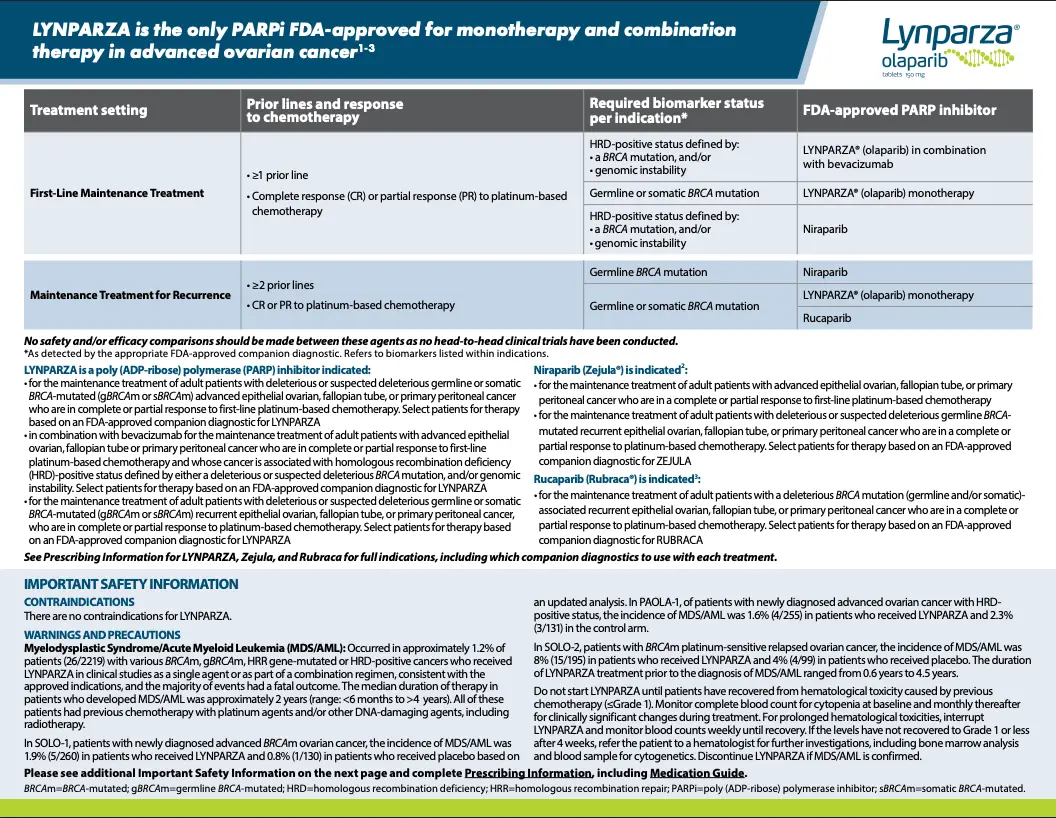
Compare indications available for PARP inhibitors in aOC, including monotherapy and combination therapy indications for LYNPARZA.
DownloadOverview of HRD Testing and 1L Maintenance Data
Learn about identifying patients with HRD-positive aOC, including non-BRCAm HRD-positive patients. Explore efficacy and safety results from the PAOLA-1 trial.
DownloadAdditional ovarian cancer resources
Adverse Reaction Management
Explore adverse reaction data from clinical trials including median onset and duration of ARs, and view AR management strategies based on established medical protocols.
Learn more
Dr Sharyn N. Lewin Discusses the PAOLA-1 Clinical Trial Results
In this video, Dr Sharyn N. Lewin, a leading gynecologic oncologist, discusses key data for LYNPARZA® (olaparib) + bevacizumab from the PAOLA-1 study, including the prespecified 5-year follow-up PFS and OS analyses, and post hoc exploratory subgroup analyses of PFS and OS by clinical risk.
Please see Important Safety Information for LYNPARZA within the video and below.
[Light music fades in with visual]
LYNPARZA is indicated in combination with bevacizumab for the maintenance treatment of adult patients with advanced epithelial ovarian, fallopian tube or primary peritoneal cancer who are in complete or partial response to first-line platinum-based chemotherapy and whose cancer is associated with homologous recombination deficiency (HRD)-positive status defined by either a deleterious or suspected deleterious BRCA mutation, and/or genomic instability. Select patients for therapy based on an FDA-approved companion diagnostic for LYNPARZA
Select Safety Information
- Serious and potentially fatal adverse events included:
- Myelodysplastic syndrome/acute myeloid leukemia (MDS/AML): Monitor patients for hematological toxicity at baseline and monthly thereafter. Discontinue if MDS/AML is confirmed
- Pneumonitis: Interrupt treatment if pneumonitis is suspected. Discontinue if pneumonitis is confirmed
- Venous thromboembolism (VTE): Including severe or fatal pulmonary embolism (PE). Monitor patients for signs and symptoms of venous thrombosis and PE, and treat as medically appropriate
- Hepatotoxicity, including drug-induced liver injury (DILI): Evaluate bilirubin and transaminases at baseline and throughout treatment with LYNPARZA. For patients who develop abnormal liver tests after LYNPARZA, monitor more frequently for liver test abnormalities and clinical signs and symptoms of hepatic toxicity. If DILI is suspected, interrupt LYNPARZA. If DILI is confirmed, discontinue treatment
- Advise patients of the potential risk of embryo-fetal toxicity and to use effective contraception
- Most common adverse reactions (≥10%) in clinical trials:
- in combination with bevacizumab were nausea, fatigue (including asthenia), anemia, lymphopenia, vomiting, diarrhea, neutropenia, leukopenia, urinary tract infection, and headache
Please see Important Safety Information later in this video
Hello, I’m Dr Sharyn Lewin, Director of Gynecologic Oncology at Holy Name in Teaneck, New Jersey. I’m also an Assistant Clinical Professor in the Icahn School of Medicine at Mount Sinai Hospital, New York, New York
During the time that we’re together today, we will review the primary analysis from the PAOLA-1 trial, data from the 5-year follow-up overall survival analysis, as well as a post hoc exploratory subgroup analysis of PFS by higher and lower clinical risk in HRD-positive patients
PAOLA-1 was a registration trial that was designed to meet an important unmet need
Key eligibility criteria included women with Stage 3 or 4 advanced ovarian, primary peritoneal, or fallopian tube cancers regardless of BRCA mutation status; so really all-comers were enrolled. Women could have had either upfront surgery followed by adjuvant chemotherapy or neoadjuvant chemotherapy followed by an interval surgery. They had to have at least three cycles of bevacizumab in combination with platinum-based chemotherapy
If they had at least a partial response, they were then randomized in a two-to-one fashion to maintenance therapy with either bevacizumab in combination with LYNPARZA or bevacizumab alone. So, this trial unlike the other PARP trials in ovarian cancer, has an active comparator arm, bevacizumab, which was continued for up to 15 months. This included the time given with chemotherapy and as maintenance at the standard dose of 15 mg/kg
In the experimental arm, LYNPARZA was given at 300 mg twice a day for up to 2 years or until disease progression or unacceptable toxicity. The primary endpoint was investigator-assessed progression-free survival. Overall survival was a key secondary endpoint, and a prespecified exploratory analysis looked at PFS in predefined subgroups including those with HRD and BRCA mutation status. PFS in HRD-positive patients served as the basis for the FDA-approved indication
We saw in the PAOLA-1 trial that about half of the participants had HRD, so essentially the biomarker status that we saw in PAOLA-1 really mirrors what we see in real-world practice
HRD was measured by a companion diagnostic, Myriad’s MyChoice CDx. Their genomic instability score measures loss of heterozygosity, telomeric allelic imbalance, and large-scale state transitions
Now let’s look at the initial data from the primary analysis before we talk about the prespecified 5-year follow-up in the HRD-positive patients
As you can see from the top line in green, the median PFS with the combination of LYNPARZA plus bevacizumab in the primary analysis was 37.2 months versus 17.7 months with bevacizumab alone. Here the hazard ratio was 0.33 so a 67 percent reduction in progression or death by having a combination of LYNPARZA plus bevacizumab versus bevacizumab alone
Here you can see the Kaplan–Meier curve from the 5-year follow-up data in these HRD-positive patients. The median PFS with the combination of LYNPARZA plus bevacizumab was 46.8 months, or almost four years compared to the bevacizumab-only arm, in which the median PFS was 17.6 months, or almost 1.5 years
Here the hazard ratio was 0.41 so essentially a 59 percent risk reduction in progression or death by having LYNPARZA plus bevacizumab versus bevacizumab alone. At five years, approximately half of those women with HRD were progression-free with the combination of LYNPARZA plus bevacizumab versus only approximately 19 percent with bevacizumab alone. Data were not powered to detect a statistical difference
Next, let’s look at the overall survival data in these patients
In the prespecified 5-year follow-up overall survival analysis in HRD-positive patients, at 5 years nearly 66 percent of patients were estimated to be alive with the combination of LYNPARZA plus bevacizumab versus only about 48 percent with bevacizumab alone
You can see here the median overall survival with the combination was 75.2 months or about 6.3 years and in the bevacizumab-only arm this was 57.3 months or about 4.8 years
Of note, this analysis was not powered to detect a statistical difference
This is a post hoc exploratory subgroup analysis of progression-free survival by clinical risk for relapse in HRD-positive patients. These are women with Stage 3 disease who had upfront surgery and had residual disease or received neoadjuvant chemotherapy or Stage 4 patients
There is no official clinical consensus on what is considered higher versus lower risk. Data are based on post hoc exploratory subgroup analyses in 2 clinical subgroups, higher-risk and lower-risk, including biomarker status. Neither HRD status nor risk factor was a stratification factor in PAOLA-1
The lower-risk patients are those with Stage 3 disease that underwent upfront surgery and were completely resected. Those women as we know fall into a sort of better prognostic group than the highest-risk patients
–The median PFS in the LYNPARZA plus bevacizumab arm has not yet been reached. And, if you look at the Kaplan-Meier curve, LYNPARZA plus bevacizumab at the two-year mark, ninety percent of the lower-risk patients were progression-free at 2 years.
–Whereas with bevacizumab alone, the median PFS here is 22 months and only 43 percent of patients are progression-free at the 24-month mark. So there was a hazard ratio of 0.15, an 85-percent risk reduction in progression or death by having the combination of LYNPARZA plus bevacizumab versus bevacizumab alone
The median PFS in these highest-risk patients was about 36 months with a combination of LYNPARZA plus bevacizumab versus about 16 months in the group that was treated with bevacizumab alone
Here, the hazard ratio was 0.39, almost a 61 percent risk reduction in progression or death by having the combination of LYNPARZA plus bevacizumab versus bevacizumab alone
Here are the data for the 5-year follow-up, post hoc exploratory subgroup analysis of overall survival by clinical risk for relapse in HRD-positive patients
Again, there is no official clinical consensus on what is considered higher versus lower risk, and neither HRD status nor risk factor was a stratification factor in PAOLA-1
The median OS in the LYNPARZA plus bevacizumab arm and the bevacizumab alone arm are not evaluable, with a hazard ratio of 0.31, so a nearly 70% risk reduction
Looking at the 5-year mark, 88.3% of patients were estimated to be alive with LYNPARZA plus bevacizumab, and 61.3% were estimated to be alive with bevacizumab alone
You can see that the median OS in these higher-risk patients was 67 months with the combination of LYNPARZA plus bevacizumab versus 54 months with bevacizumab alone. The median for LYNPARZA + bevacizumab is unstable due to a lack of events. Here, the hazard ratio was 0.70, so about a 30 percent risk reduction with the combination of LYNPARZA plus bevacizumab versus bevacizumab alone
Here we have the adverse reactions reported in 10 percent or more of women with LYNPARZA and bevacizumab and 5% or more in those that received bevacizumab alone
So, as you can see, most of the adverse reactions were Grade 1 and Grade 2
Adverse events that we would typically think about like fatigue, nausea, anemia, and some of the GI side effects were more common
Fatal adverse reactions occurred in 1 patient due to concurrent pneumonia and aplastic anemia
Serious adverse reactions occurred in 31% of patients who received LYNPARZA plus bevacizumab
Serious adverse reactions in >5% of patients included hypertension and anemia
In addition, venous thromboembolism occurred more commonly in patients receiving LYNPARZA plus bevacizumab than in those receiving placebo plus bevacizumab
This screen shows the laboratory abnormalities that were reported in 25% or more of patients treated on this study
Laboratory abnormalities were also mostly Grade 1 and Grade 2
Grades 3 or 4 lab abnormalities were experienced by 13% of patients in the active treatment arm and 4% in the active comparator arm
The most common laboratory abnormalities were decrease in hemoglobin, decrease in lymphocytes, increase in serum creatinine
You can see that in the LYNPARZA plus bevacizumab arm, 54% of patients needed dose interruptions, 41% had dose reductions, and 20% discontinued due to adverse reactions
Overall, the combination of LYNPARZA plus bevacizumab was well tolerated, so the median duration of treatment with LYNPARZA was a little over 17 months and 11 months for bevacizumab post-randomization and anemia, nausea were reported to cause discontinuation rates in 4% and 3% of patients, respectively
In the placebo arm plus bevacizumab you can see dose interruptions were necessary in about 24%, dose reductions in about 7%, and discontinuations in about 6%
Here, we see the adverse events of special interest, and it’s good to know that at the 5-year follow-up analysis no new safety signals were identified
At the 5-year follow-up analysis, the incidence of MDS/AML in patients with HRD-positive status was 1.6% in the LYNPARZA plus bevacizumab arm and 2.3% in the bevacizumab plus placebo arm
When we’re looking at primary malignancies, the rate of primary malignancies in the combination group was about 4% in the 5-year follow-up analysis and about 3% in the bevacizumab-only group
And the risk of pneumonitis in the combination group was about 1.3% at the 5-year analysis and under 1% in the bevacizumab-only group
Overall, the safety profile remained consistent with the primary analysis
The National Comprehensive Cancer Network® (or NCCN®) recommends the use of olaparib (LYNPARZA®) plus bevacizumab as a maintenance option for patients with a BRCA mutation or who are HRD-positive and who achieve a complete or partial response after first-line platinum-based chemotherapy plus bevacizumab; this is a category 1 recommendation
PAOLA-1 shows the efficacy of using bevacizumab and LYNPARZA as maintenance therapy in HRD-positive advanced ovarian cancer after response to platinum-based chemotherapy in combination with bevacizumab
In the prespecified exploratory analysis, the median PFS with LYNPARZA plus bevacizumab was about 3.1 years and 1.5 years in the bevacizumab-only arm
In the prespecified follow-up analysis at five years, approximately half of patients, 46% were progression-free with LYNPARZA plus bevacizumab, and 19% were progression-free with bevacizumab alone. So, there was an improvement in the median progression-free survival for these women with HRD when you’re adding LYNPARZA to bevacizumab in the maintenance setting
The median overall survival with the combination was 75.2 months or about 6.3 years and in the bevacizumab-only arm this was 57.3 months or about 4.8 years
The most common adverse reactions Grade 1 and Grade 2 included fatigue, anemia, nausea, vomiting, lymphopenia, and leukopenia
PAOLA-1 treatment eligibility is driven by HRD status. About half of women with ovarian cancer have HRD or HRD-positive tumors. It’s really critically important that we not only do germline testing right when these women are diagnosed with ovarian cancer, but also HRD testing so we can make important treatment decisions in the maintenance setting
Next, we will review the Important Safety Information for LYNPARZA
IMPORTANT SAFETY INFORMATION
CONTRAINDICATIONS
There are no contraindications for LYNPARZA.
WARNINGS AND PRECAUTIONS
Myelodysplastic Syndrome/Acute Myeloid Leukemia (MDS/AML): Occurred in approximately 1.2% of patients (26/2219) with various BRCAm, gBRCAm, HRR gene-mutated or HRD-positive cancers who received LYNPARZA in clinical studies as a single agent or as part of a combination regimen, consistent with the approved indications, and the majority of events had a fatal outcome. The median duration of therapy in patients who developed MDS/AML was approximately 2 years (range: <6 months to >4 years). All of these patients had previous chemotherapy with platinum agents and/or other DNA-damaging agents, including radiotherapy.
In SOLO-1, patients with newly diagnosed advanced BRCAm ovarian cancer, the incidence of MDS/AML was 1.9% (5/260) in patients who received LYNPARZA and 0.8% (1/130) in patients who received placebo based on an updated analysis. In PAOLA-1, of patients with newly diagnosed advanced ovarian cancer with HRD-positive status, the incidence of MDS/AML was 1.6% (4/255) in patients who received LYNPARZA and 2.3% (3/131) in the control arm.
In SOLO-2, patients with BRCAm platinum-sensitive relapsed ovarian cancer, the incidence of MDS/AML was 8% (15/195) in patients who received LYNPARZA and 4% (4/99) in patients who received placebo. The duration of LYNPARZA treatment prior to the diagnosis of MDS/AML ranged from 0.6 years to 4.5 years.
Do not start LYNPARZA until patients have recovered from hematological toxicity caused by previous chemotherapy (≤Grade 1). Monitor complete blood count for cytopenia at baseline and monthly thereafter for clinically significant changes during treatment. For prolonged hematological toxicities, interrupt LYNPARZA and monitor blood counts weekly until recovery. If the levels have not recovered to Grade 1 or less after 4 weeks, refer the patient to a hematologist for further investigations, including bone marrow analysis and blood sample for cytogenetics. Discontinue LYNPARZA if MDS/AML is confirmed.
Pneumonitis: Including severe and fatal cases, has occurred in patients treated with LYNPARZA. In clinical studies, among patients who received LYNPARZA as a single agent or as part of a combination regimen, the incidence of pneumonitis, including fatal cases, was 1.0% (29/2851). If patients present with new or worsening respiratory symptoms such as dyspnea, cough, and fever, or a radiological abnormality occurs, interrupt LYNPARZA treatment and promptly assess the source of the symptoms. If pneumonitis is confirmed, discontinue LYNPARZA treatment and treat the patient appropriately.
Venous Thromboembolism (VTE): Including severe or fatal pulmonary embolism (PE), occurred in patients treated with LYNPARZA. Monitor patients for signs and symptoms of venous thrombosis and pulmonary embolism, and treat as medically appropriate, which may include long-term anticoagulation as clinically indicated.
Hepatotoxicity, including Drug-Induced Liver Injury (DILI): Hepatotoxicity, including severe and potentially fatal cases of DILI has occurred in patients treated with LYNPARZA. Evaluate bilirubin and transaminases at baseline and throughout treatment with LYNPARZA. For patients who develop abnormal liver tests after LYNPARZA, monitor more frequently for liver test abnormalities and clinical signs and symptoms of hepatic toxicity. If DILI is suspected, withhold LYNPARZA. Upon confirmation of DILI, discontinue LYNPARZA.
Embryo-Fetal Toxicity: Based on its mechanism of action and findings in animals, LYNPARZA can cause fetal harm. Verify pregnancy status in females of reproductive potential prior to initiating treatment.
Females
Advise females of reproductive potential of the potential risk to a fetus and to use effective contraception during treatment and for 6 months following the last dose.
ADVERSE REACTIONS—First-Line Maintenance Advanced Ovarian Cancer in Combination with Bevacizumab
Most common adverse reactions (Grades 1-4) in ≥10% of patients treated with LYNPARZA/bevacizumab and at a ≥5% frequency compared to placebo/bevacizumab in the first-line maintenance setting for PAOLA-1 were: nausea (53%), fatigue (including asthenia) (53%), anemia (41%), lymphopenia (24%), vomiting (22%), and leukopenia (18%). In addition, the most common adverse reactions (≥10%) for patients receiving LYNPARZA/bevacizumab irrespective of the frequency compared with the placebo/bevacizumab arm were: diarrhea (18%), neutropenia (18%), urinary tract infection (15%), and headache (14%).
In addition, venous thromboembolism occurred more commonly in patients receiving LYNPARZA/bevacizumab (5%) than in those receiving placebo/bevacizumab (1.9%).
Most common laboratory abnormalities (Grades 1-4) in ≥25% of patients for LYNPARZA in combination with bevacizumab in the first-line maintenance setting for PAOLA-1 were: decrease in hemoglobin (79%), decrease in lymphocytes (63%), increase in serum creatinine (61%), decrease in leukocytes (59%), decrease in absolute neutrophil count (35%), and decrease in platelets (35%).
DRUG INTERACTIONS
Anticancer Agents: Clinical studies of LYNPARZA with other myelosuppressive anticancer agents, including DNA-damaging agents, indicate a potentiation and prolongation of myelosuppressive toxicity.
CYP3A Inhibitors: Avoid coadministration of strong or moderate CYP3A inhibitors when using LYNPARZA. If a strong or moderate CYP3A inhibitor must be coadministered, reduce the dose of LYNPARZA. Advise patients to avoid grapefruit, grapefruit juice, Seville oranges, and Seville orange juice during LYNPARZA treatment.
CYP3A Inducers: Avoid coadministration of strong or moderate CYP3A inducers when using LYNPARZA.
USE IN SPECIFIC POPULATIONS
Lactation: No data are available regarding the presence of olaparib in human milk, its effects on the breastfed infant or on milk production. Because of the potential for serious adverse reactions in the breastfed infant, advise a lactating woman not to breastfeed during treatment with LYNPARZA and for 1 month after receiving the final dose.
Pediatric Use: The safety and efficacy of LYNPARZA have not been established in pediatric patients.
Hepatic Impairment: No adjustment to the starting dose is required in patients with mild or moderate hepatic impairment (Child-Pugh classification A and B). There are no data in patients with severe hepatic impairment (Child-Pugh classification C).
Renal Impairment: No dosage modification is recommended in patients with mild renal impairment (CLcr 51-80 mL/min estimated by Cockcroft-Gault). In patients with moderate renal impairment (CLcr 31-50 mL/min), reduce the dose of LYNPARZA to 200 mg twice daily. There are no data in patients with severe renal impairment or end-stage renal disease (CLcr ≤30 mL/min).
Please see complete Prescribing Information, including Medication Guide, at the URL shown on the screen.
You are encouraged to report side effects related to AstraZeneca products by calling 1-800-236-9933. If you prefer to report these to the FDA, please call 1-800-FDA-1088.
Thank you for your time. I hope you found the information presented to be useful to your clinical practice
[Light music fades in with visual]
Dr Sharyn N. Lewin Discusses the SOLO-1 Clinical Trial Results
In this video, Dr Sharyn N. Lewin, a leading gynecologic oncologist, discusses key data for LYNPARZA® (olaparib) from the SOLO-1 study, including the post hoc 5-year PFS follow-up and prespecified 7-year OS analyses.
Please see Important Safety Information for LYNPARZA within the video and below.
[Light music fades in with visual]
LYNPARZA is indicated for the maintenance treatment of adult patients with deleterious or suspected deleterious germline or somatic BRCA-mutated (gBRCAm or sBRCAm) advanced epithelial ovarian, fallopian tube, or primary peritoneal cancer who are in complete or partial response to first-line platinum-based chemotherapy. Select patients for therapy based on an FDA-approved companion diagnostic for LYNPARZA.
Select Safety Information
- Serious and potentially fatal adverse events included:
- Myelodysplastic syndrome/acute myeloid leukemia (MDS/AML): Monitor patients for hematological toxicity at baseline and monthly thereafter. Discontinue if MDS/AML is confirmed
- Pneumonitis: Interrupt treatment if pneumonitis is suspected. Discontinue if pneumonitis is confirmed
- Venous thromboembolism (VTE): Including severe or fatal pulmonary embolism (PE). Monitor patients for signs and symptoms of venous thrombosis and PE, and treat as medically appropriate
- Hepatotoxicity, including drug-induced liver injury (DILI): Evaluate bilirubin and transaminases at baseline and throughout treatment with LYNPARZA. For patients who develop abnormal liver tests after LYNPARZA, monitor more frequently for liver test abnormalities and clinical signs and symptoms of hepatic toxicity. If DILI is suspected, interrupt LYNPARZA. If DILI is confirmed, discontinue treatment
- Advise patients of the potential risk of embryo-fetal toxicity and to use effective contraception
- Most common adverse reactions (≥10%) in clinical trials:
- in combination with bevacizumab were nausea, fatigue (including asthenia), anemia, lymphopenia, vomiting, diarrhea, neutropenia, leukopenia, urinary tract infection, and headache
Please see Important Safety Information later in this video
Hello, I’m Dr Sharyn Lewin, director of gynecologic oncology at Holy Name in Teaneck, New Jersey. I am also an assistant clinical professor in the Icahn School of Medicine at Mount Sinai Hospital, New York, New York
Thank you for joining us today. In the time we’re here together we’re going to review the primary analysis from the pivotal SOLO-1 trial. We’ll also review the 5-year progression-free survival follow-up data from this key study, and then lastly, we’ll talk about the prespecified descriptive 7-year interim overall survival analysis
SOLO-1 was a Phase 3, randomized, double-blind, placebo-controlled trial which looked at LYNPARZA maintenance as monotherapy for women with advanced ovarian cancer following frontline therapy
To review some of the key eligibility criteria, all of the women in this study had advanced ovarian, primary peritoneal, or fallopian tube cancer. They had to have a germline or somatic BRCA mutation Following platinum-based chemotherapy, they had to be in a complete or partial response, and then patients were enrolled regardless of surgical outcome
These women were then randomized in a 2:1 fashion to LYNPARZA tablets 300 milligrams twice a day or placebo
Treatment was continued with LYNPARZA for up to 2 years or until disease progression or unacceptable toxicity
Patients who remained in complete response received a maximum duration of 2 years of therapy, but those patients who had partial response and were thought to be responding to LYNPARZA were able to continue beyond 2 years
The primary endpoint was investigator-assessed progression-free survival, and key secondary endpoints included overall survival, PFS2, and quality of life, are listed on the screen
Let’s begin by reviewing the results of the primary analysis and post hoc 5-year follow-up analysis on the screen
In the primary analysis, for the primary endpoint of PFS, the median PFS had not yet been reached with LYNPARZA, and in placebo was almost 13.8 months; this translated to a hazard ratio of 0.3, so essentially a 70 percent risk reduction in progression or death by having LYNPARZA as maintenance following frontline treatment compared to placebo, and this was statistically significant
Following the primary analysis, there was a post hoc 5-year follow-up analysis The median progression-free survival for LYNPARZA was 56 months, so almost 5 years compared to placebo in the gray line at the bottom. The median PFS for placebo was 13.8 months or basically 1.2 years So, at 5 years approximately half of the patients who had been treated with LYNPARZA were progression free compared to only 21 percent with placebo The analyses at 5 years is based on Kaplan-Meier estimates and is descriptive only; the SOLO-1 trial was not designed to assess a statistical difference between treatment groups at this time point
This visual shows the prespecified descriptive 7-year interim overall survival analysis As you see here, at 38% data maturity and a little over 7 years of follow-up, the median overall survival has not yet been reached with LYNPARZA and was 6.3 years with placebo And then you can see here the survival at the 60-month mark and then again at the 84-month mark This analysis is based on Kaplan-Meier estimates and is descriptive only
Some of the select adverse reactions that occurred in 10% or more of patients who received LYNPARZA in SOLO-1 are shown on the screen The light blue and gray bars show the incidence of all grades whereas the dark blue and gray bars show Grades 3 and 4, and as you can see here, the majority of adverse reactions with LYNPARZA were Grade 1 and Grade 2 The most common adverse reactions that we saw in SOLO-1 were things like nausea, fatigue, and abdominal pain
Laboratory abnormalities that were seen in 25% or more of patients on LYNPARZA vs placebo are illustrated here The most common laboratory abnormalities seen would be things like decrease in hemoglobin, a slight increase in the mean corpuscular volume, and a decrease in leukocytes
It is important that any of the hematologic toxicities from chemotherapy resolve prior to starting LYNPARZA You do want to check a baseline complete blood count prior to starting LYNPARZA and then monitor patients with monthly CBCs thereafter
Some of the adverse events of special interest that are noteworthy for the primary, 5-year, and 7-year analyses are illustrated on the screen You can see the rates of MDS and AML, as well as the rates of primary malignancies and pneumonitis, from the LYNPARZA-treated group versus placebo As of the 7-year analysis, the rate of MDS/AML was 1.5% in the LYNPARZA arm and 0.8% in the placebo arm; subsequent to this, an additional case was reported in the LYNPARZA arm based on an updated analysis, bringing the total to 5 cases, or 1.9% The rate of primary malignancies at the 7-year follow-up analysis was about 5.4% with LYNPARZA and 6.2% with placebo For pneumonitis or interstitial lung disease, the rate has remained constant since the primary analysis, with 1.9% with LYNPARZA and 0% with placebo At the 7-year follow-up analysis there were no new safety signals and the safety profile remained generally consistent with the primary and 5-year analyses
Looking at LYNPARZA dose modifications due to adverse reactions in SOLO-1
3 out of 4 patients did not require a dose reduction, and 9 out of 10 patients remained on LYNPARZA without any treatment-related discontinuations Overall, the discontinuation rate was about 12%, with dose reductions at 28% and dose interruptions at 52% At the 7-year follow-up analysis, we can see that there were some dose reductions as well as some dose interruptions; however, the discontinuation rate still remained at only about 12%
NCCN Guidelines® recommend single-agent olaparib as a maintenance therapy option for certain patients with advanced ovarian cancer who are in partial or complete response after surgery and first-line platinum-based chemotherapy and have a germline or somatic BRCA1/2 mutation This is a category 1 recommendation for patients who did not receive bevacizumab-containing primary chemotherapy
Overall, for my clinical practice, the SOLO-1 trial really changed how I treat my patients with germline and somatic BRCA-mutated advanced ovarian cancer
In the primary analysis, the median PFS was not reached with LYNPARZA versus 1.2 years with placebo; at the post hoc 5-year follow-up analysis, almost half of the patients who had been treated with LYNPARZA were progression-free compared to only 21% with placebo When we’re looking at the interim median overall survival, the prespecified 7-year descriptive analysis, at 7 years 67% of patients were alive with LYNPARZA compared to 47% with placebo, and the median overall survival in the LYNPARZA-treated group has not yet been reached compared to 6.3 years in the placebo group The 5-year PFS follow-up analysis and overall survival analysis are based on Kaplan–Meier estimates and are descriptive only Most adverse reactions were Grade 1 and Grade 2, and the most common adverse reactions were things like nausea, fatigue, abdominal pain, vomiting, anemia, and diarrhea, which in my experience, are very tolerable and well managed with appropriate counseling
Next, we will review the Important Safety Information for LYNPARZA
IMPORTANT SAFETY INFORMATION
CONTRAINDICATIONS
There are no contraindications for LYNPARZA.
WARNINGS AND PRECAUTIONS
Myelodysplastic Syndrome/Acute Myeloid Leukemia (MDS/AML): Occurred in approximately 1.2% of patients (26/2219) with various BRCAm, gBRCAm, HRR gene-mutated or HRD-positive cancers who received LYNPARZA in clinical studies as a single agent or as part of a combination regimen, consistent with the approved indications, and the majority of events had a fatal outcome. The median duration of therapy in patients who developed MDS/AML was approximately 2 years (range: <6 months to >4 years). All of these patients had previous chemotherapy with platinum agents and/or other DNA-damaging agents, including radiotherapy.
In SOLO-1, patients with newly diagnosed advanced BRCAm ovarian cancer, the incidence of MDS/AML was 1.9% (5/260) in patients who received LYNPARZA and 0.8% (1/130) in patients who received placebo based on an updated analysis. In PAOLA-1, of patients with newly diagnosed advanced ovarian cancer with HRD-positive status, the incidence of MDS/AML was 1.6% (4/255) in patients who received LYNPARZA and 2.3% (3/131) in the control arm.
In SOLO-2, patients with BRCAm platinum-sensitive relapsed ovarian cancer, the incidence of MDS/AML was 8% (15/195) in patients who received LYNPARZA and 4% (4/99) in patients who received placebo. The duration of LYNPARZA treatment prior to the diagnosis of MDS/AML ranged from 0.6 years to 4.5 years.
Do not start LYNPARZA until patients have recovered from hematological toxicity caused by previous chemotherapy (≤Grade 1). Monitor complete blood count for cytopenia at baseline and monthly thereafter for clinically significant changes during treatment. For prolonged hematological toxicities, interrupt LYNPARZA and monitor blood counts weekly until recovery. If the levels have not recovered to Grade 1 or less after 4 weeks, refer the patient to a hematologist for further investigations, including bone marrow analysis and blood sample for cytogenetics. Discontinue LYNPARZA if MDS/AML is confirmed.
Pneumonitis: Including severe and fatal cases, has occurred in patients treated with LYNPARZA. In clinical studies, among patients who received LYNPARZA as a single agent or as part of a combination regimen, the incidence of pneumonitis, including fatal cases, was 1.0% (29/2851). If patients present with new or worsening respiratory symptoms such as dyspnea, cough, and fever, or a radiological abnormality occurs, interrupt LYNPARZA treatment and promptly assess the source of the symptoms. If pneumonitis is confirmed, discontinue LYNPARZA treatment and treat the patient appropriately.
Venous Thromboembolism (VTE): Including severe or fatal pulmonary embolism (PE), occurred in patients treated with LYNPARZA. Monitor patients for signs and symptoms of venous thrombosis and pulmonary embolism, and treat as medically appropriate, which may include long-term anticoagulation as clinically indicated.
Hepatotoxicity, including Drug-Induced Liver Injury (DILI): Hepatotoxicity, including severe and potentially fatal cases of DILI has occurred in patients treated with LYNPARZA. Evaluate bilirubin and transaminases at baseline and throughout treatment with LYNPARZA. For patients who develop abnormal liver tests after LYNPARZA, monitor more frequently for liver test abnormalities and clinical signs and symptoms of hepatic toxicity. If DILI is suspected, withhold LYNPARZA. Upon confirmation of DILI, discontinue LYNPARZA.
Embryo-Fetal Toxicity: Based on its mechanism of action and findings in animals, LYNPARZA can cause fetal harm. Verify pregnancy status in females of reproductive potential prior to initiating treatment.
Females
Advise females of reproductive potential of the potential risk to a fetus and to use effective contraception during treatment and for 6 months following the last dose.
ADVERSE REACTIONS—First-Line Maintenance BRCAm Advanced Ovarian Cancer
Most common adverse reactions (all Grades) in ≥10% of patients who received LYNPARZA in the first-line maintenance setting for SOLO-1 were: nausea (77%), fatigue (67%), abdominal pain (45%), vomiting (40%), anemia (38%), diarrhea (37%), constipation (28%), upper respiratory tract infection/influenza/nasopharyngitis/bronchitis (28%), dysgeusia (26%), decreased appetite (20%), dizziness (20%), neutropenia (17%), dyspepsia (17%), dyspnea (15%), leukopenia (13%), urinary tract infection (13%), thrombocytopenia (11%), and stomatitis (11%).
Most common laboratory abnormalities (Grades 1-4) in ≥25% of patients who received LYNPARZA in the first-line maintenance setting for SOLO-1 were: decrease in hemoglobin (87%), increase in mean corpuscular volume (87%), decrease in leukocytes (70%), decrease in lymphocytes (67%), decrease in absolute neutrophil count (51%), decrease in platelets (35%), and increase in serum creatinine (34%).
DRUG INTERACTIONS
Anticancer Agents: Clinical studies of LYNPARZA with other myelosuppressive anticancer agents, including DNA-damaging agents, indicate a potentiation and prolongation of myelosuppressive toxicity.
CYP3A Inhibitors: Avoid coadministration of strong or moderate CYP3A inhibitors when using LYNPARZA. If a strong or moderate CYP3A inhibitor must be coadministered, reduce the dose of LYNPARZA. Advise patients to avoid grapefruit, grapefruit juice, Seville oranges, and Seville orange juice during LYNPARZA treatment.
CYP3A Inducers: Avoid coadministration of strong or moderate CYP3A inducers when using LYNPARZA.
USE IN SPECIFIC POPULATIONS
Lactation: No data are available regarding the presence of olaparib in human milk, its effects on the breastfed infant or on milk production. Because of the potential for serious adverse reactions in the breastfed infant, advise a lactating woman not to breastfeed during treatment with LYNPARZA and for 1 month after receiving the final dose.
Pediatric Use: The safety and efficacy of LYNPARZA have not been established in pediatric patients.
Hepatic Impairment: No adjustment to the starting dose is required in patients with mild or moderate hepatic impairment (Child-Pugh classification A and B). There are no data in patients with severe hepatic impairment (Child-Pugh classification C).
Renal Impairment: No dosage modification is recommended in patients with mild renal impairment (CLcr 51-80 mL/min estimated by Cockcroft-Gault). In patients with moderate renal impairment (CLcr 31-50 mL/min), reduce the dose of LYNPARZA to 200 mg twice daily. There are no data in patients with severe renal impairment or end-stage renal disease (CLcr ≤30 mL/min).
Please see complete Prescribing Information, including Medication Guide, at the URL shown on the screen.
You are encouraged to report negative side effects of AstraZeneca prescription drugs by calling 1-800-236-9933. If you prefer to report these to the FDA, call 1-800-FDA-1088.
Thank you for your time. I hope you found the information presented to be useful to your clinical practice
[Light music fades in with visual]
Perspective on patient journey and maintenance therapy with LYNPARZA + bevacizumab
In this video, Dr Misagh Karimi, a medical oncologist, Dr Sharyn N. Lewin, a gynecologic oncologist, and Diana Czel, a nurse practitioner, discuss their perspectives regarding key points related to the patient journey and maintenance therapy with LYNPARZA ± bevacizumab.
Please see Important Safety Information for LYNPARZA within the video and below.
[Light music fades in with visual]
Sharyn Lewin: Hello, and welcome to this video on multidisciplinary perspectives in the care of patients receiving LYNPARZA (olaparib). I’m Dr Sharyn Lewin, and I’m a gynecologic oncologist practicing in New Jersey and New York
Misagh Karimi: Hello, I am Dr Misagh Karimi, a medical oncologist in California
Diana Czel: And I’m Diana Czel, a nurse practitioner in Minnesota
Diana Czel: In this video, we will be sharing our perspectives on clinical decision-making with LYNPARZA and the role of the multidisciplinary team in caring for patients with certain types of advanced ovarian cancer
INDICATIONS
First-Line Maintenance BRCAm Advanced Ovarian Cancer
For the maintenance treatment of adult patients with deleterious or suspected deleterious germline or somatic BRCA-mutated (gBRCAm or sBRCAm) advanced epithelial ovarian, fallopian tube, or primary peritoneal cancer who are in complete or partial response to first-line platinum-based chemotherapy. Select patients for therapy based on an FDA-approved companion diagnostic for LYNPARZA.
First-Line Maintenance HRD-Positive Advanced Ovarian Cancer in Combination with Bevacizumab
LYNPARZA is indicated in combination with bevacizumab for the maintenance treatment of adult patients with advanced epithelial ovarian, fallopian tube or primary peritoneal cancer who are in complete or partial response to first-line platinum-based chemotherapy and whose cancer is associated with homologous recombination deficiency (HRD)-positive status defined by either a deleterious or suspected deleterious BRCA mutation, and/or genomic instability. Select patients for therapy based on an FDA-approved companion diagnostic for LYNPARZA.
IMPORTANT SAFETY INFORMATION
CONTRAINDICATIONS
There are no contraindications for LYNPARZA.
WARNINGS AND PRECAUTIONS
Myelodysplastic Syndrome/Acute Myeloid Leukemia (MDS/AML): Occurred in approximately 1.2% of patients (26/2219) with various BRCAm, gBRCAm, HRR gene-mutated or HRD-positive cancers who received LYNPARZA in clinical studies as a single agent or as part of a combination regimen, consistent with the approved indications, and the majority of events had a fatal outcome. The median duration of therapy in patients who developed MDS/AML was approximately 2 years (range: <6 months to >4 years). All of these patients had previous chemotherapy with platinum agents and/or other DNA-damaging agents, including radiotherapy.
In SOLO-1, patients with newly diagnosed advanced BRCAm ovarian cancer, the incidence of MDS/AML was 1.9% (5/260) in patients who received LYNPARZA and 0.8% (1/130) in patients who received placebo based on an updated analysis. In PAOLA-1, of patients with newly diagnosed advanced ovarian cancer with HRD-positive status, the incidence of MDS/AML was 1.6% (4/255) in patients who received LYNPARZA and 2.3% (3/131) in the control arm.
In SOLO-2, patients with BRCAm platinum-sensitive relapsed ovarian cancer, the incidence of MDS/AML was 8% (15/195) in patients who received LYNPARZA and 4% (4/99) in patients who received placebo. The duration of LYNPARZA treatment prior to the diagnosis of MDS/AML ranged from 0.6 years to 4.5 years.
Do not start LYNPARZA until patients have recovered from hematological toxicity caused by previous chemotherapy (≤Grade 1). Monitor complete blood count for cytopenia at baseline and monthly thereafter for clinically significant changes during treatment. For prolonged hematological toxicities, interrupt LYNPARZA and monitor blood counts weekly until recovery. If the levels have not recovered to Grade 1 or less after 4 weeks, refer the patient to a hematologist for further investigations, including bone marrow analysis and blood sample for cytogenetics. Discontinue LYNPARZA if MDS/AML is confirmed.
Pneumonitis: Including severe and fatal cases, has occurred in patients treated with LYNPARZA. In clinical studies, among patients who received LYNPARZA as a single agent or as part of a combination regimen, the incidence of pneumonitis, including fatal cases, was 1.0% (29/2851). If patients present with new or worsening respiratory symptoms such as dyspnea, cough, and fever, or a radiological abnormality occurs, interrupt LYNPARZA treatment and promptly assess the source of the symptoms. If pneumonitis is confirmed, discontinue LYNPARZA treatment and treat the patient appropriately.
Venous Thromboembolism (VTE): Including severe or fatal pulmonary embolism (PE), occurred in patients treated with LYNPARZA. Monitor patients for signs and symptoms of venous thrombosis and pulmonary embolism, and treat as medically appropriate, which may include long-term anticoagulation as clinically indicated.
Hepatotoxicity, including Drug-Induced Liver Injury (DILI): Hepatotoxicity, including severe and potentially fatal cases of DILI has occurred in patients treated with LYNPARZA. Evaluate bilirubin and transaminases at baseline and throughout treatment with LYNPARZA. For patients who develop abnormal liver tests after LYNPARZA, monitor more frequently for liver test abnormalities and clinical signs and symptoms of hepatic toxicity. If DILI is suspected, withhold LYNPARZA. Upon confirmation of DILI, discontinue LYNPARZA.
Embryo-Fetal Toxicity: Based on its mechanism of action and findings in animals, LYNPARZA can cause fetal harm. Verify pregnancy status in females of reproductive potential prior to initiating treatment.
Females
Advise females of reproductive potential of the potential risk to a fetus and to use effective contraception during treatment and for 6 months following the last dose.
Please see additional Important Safety Information later in this video.
Diana Czel: The first point I’d like to talk about is how we’ve seen the treatment landscape for advanced ovarian cancer change over the past decade. We’ve seen not only the introduction of maintenance therapy, but also a shift toward maintenance approach driven by biomarkers, such as BRCA mutations and homologous recombination deficiency, or HRD. Dr Karimi, how has your experience in treating patients with newly diagnosed advanced ovarian cancer changed over the years?
Misagh Karimi: I agree the landscape has changed dramatically over the last decade. We have tools that we didn’t have 10 years ago. Back then, we were not testing for HRD, but we were routinely testing for germline BRCA. However, it was for informing familial risk and not potential treatment options. Now, we know that about 1 in 4 women with advanced ovarian cancer has a BRCA mutation, and approximately 1 in 2 women with advanced ovarian cancer has HRD; these patients would still be getting first-line platinum-based chemotherapy. Once they’re finished chemotherapy, there were no biomarker-driven maintenance therapy options for these patients
Sharyn Lewin: I agree. At that time, in my practice, I was doing primary cytoreductions and intraperitoneal therapy for my patients, which as you mentioned would have included patients with BRCA mutations or HRD. This treatment would be followed by observation, just like you said, Dr Karimi, but unfortunately, in my experience, many women had recurrences.
Sharyn Lewin: Before the introduction of any type of maintenance therapy, certain studies of chemotherapy alone showed recurrence in about 70% of women with advanced Stage III ovarian cancer
Diana Czel: Then, as you know, LYNPARZA was approved in the first-line maintenance setting in 2018, for the maintenance treatment of patients with BRCA-mutated advanced ovarian cancer in complete or partial response to platinum-based chemotherapy. This approval was based on the SOLO-1 study
Misagh Karimi: In the SOLO-1 study, patients with BRCA-mutated advanced ovarian, primary peritoneal, or fallopian tube cancer in complete or partial response to first-line platinum-based chemotherapy were randomized 2:1 to receive either LYNPARZA 300 mg orally twice a day or placebo. Patients were enrolled regardless of surgical outcome. Treatment was continued for up to 2 years or until disease progression or unacceptable toxicity, and the primary endpoint was investigator-assessed progression-free survival
Sharyn Lewin: In terms of efficacy, for the primary endpoint of PFS, the hazard ratio was 0.3, representing a 70% risk reduction in progression or death by having LYNPARZA as maintenance following first-line treatment compared to placebo, and this was statistically significant. The median PFS was not reached with LYNPARZA and 13.8 months with placebo
Diana Czel: In the primary analysis, the most common adverse reactions in patients who received LYNPARZA included nausea, fatigue, and abdominal pain. The most common laboratory abnormalities among those who received LYNPARZA included decrease in hemoglobin, increase in mean corpuscular volume, and a decrease in leukocytes. Looking at dose modifications, dose interruptions due to adverse reactions occurred in 52% in the LYNPARZA arm, with dose reductions at 28% and discontinuations at 12%. Approximately 3 out of 4 patients did not require a dose reduction, and approximately 9 out of 10 patients remained on LYNPARZA without any treatment-related discontinuations
Diana Czel: Then, in 2020, we saw approval of LYNPARZA in combination with bevacizumab for the maintenance treatment of patients with HRD-positive advanced ovarian cancer in complete or partial response to first-line platinum-based chemotherapy, based on the PAOLA-1 study
Misagh Karimi: As a reminder of the study design, in PAOLA-1, patients with advanced ovarian cancer were randomized to maintenance therapy with either LYNPARZA 300 mg orally twice daily with bevacizumab 15 mg/kg intravenously every 3 weeks or to the active comparator arm of bevacizumab and placebo, following a complete or partial response to at least 3 cycles of bevacizumab in combination with first-line platinum-based chemotherapy. Bevacizumab was given for up to 15 months, which included the time given with chemotherapy and given as maintenance. Patients continued bevacizumab in the maintenance setting and started treatment with LYNPARZA after a minimum of 3 weeks and up to a maximum of 9 weeks after completion of their last dose of chemotherapy. Treatment with LYNPARZA or placebo was continued for up to 2 years or until disease progression or unacceptable toxicity. The primary endpoint was investigator-assessed progression-free survival, and overall survival was a key secondary endpoint. FDA approval was based on a prespecified exploratory subgroup of patients with HRD-positive tumors
Sharyn Lewin: In the prespecified exploratory analysis of PFS in the HRD-positive subgroup, the hazard ratio was 0.33, which represents a 67% risk reduction in progression or death with LYNPARZA plus bevacizumab. Median PFS with the combination of LYNPARZA plus bevacizumab was 37.2 months versus 17.7 months with bevacizumab plus placebo. HRD status was not a stratification factor in PAOLA-1 and analyses were not controlled for type 1 error
Sharyn Lewin: Then in the prespecified exploratory analysis of OS in the HRD-positive subgroup, there was a 38% reduction in the risk of death. Median OS was 75.2 months with LYNPARZA plus bevacizumab and 57.3 months with bevacizumab plus placebo
Misagh Karimi: Looking at safety in the primary analysis, the most common adverse reactions were fatigue, nausea, vomiting, anemia, lymphopenia, and leukopenia. Fatal adverse reactions occurred in 1 patient due to concurrent pneumonia and aplastic anemia. Serious adverse reactions occurred in 31% of patients who received LYNPARZA plus bevacizumab. Hypertension and anemia were serious adverse reactions that occurred in more than 5% of patients. Venous thromboembolism also occurred more commonly in patients receiving LYNPARZA plus bevacizumab than in those receiving placebo plus bevacizumab
Diana Czel: At the 5-year follow-up analysis, no new safety signals were identified. The incidence of MDS/AML in patients with HRD-positive status was 1.6% in the LYNPARZA plus bevacizumab arm and 2.3% in the bevacizumab plus placebo arm. The rate of new primary malignancies was 4.1% with LYNPARZA plus bevacizumab and 3% with bevacizumab plus placebo, and the rate of pneumonitis was 1.3% with LYNPARZA plus bevacizumab and 0.7% with bevacizumab plus placebo
Diana Czel: The most common laboratory abnormalities from the primary analysis were decrease in hemoglobin, decrease in lymphocytes, increase in serum creatinine, decrease in leukocytes, decrease in absolute neutrophil count, and decrease in platelets. Looking at dose modifications due to adverse reactions in PAOLA-1, in the LYNPARZA plus bevacizumab arm, 54% of patients had dose interruptions, 41% had dose reductions, and 20% discontinued treatment. Eight out of 10 women remained on LYNPARZA plus bevacizumab as prescribed, without discontinuing due to LYNPARZA adverse reactions
Misagh Karimi: With approval of LYNPARZA, with or without bevacizumab, as first-line maintenance therapy options, we’re able to take a more biomarker-driven approach in treatment decision-making. For me, it’s important to discuss maintenance therapy with my patients as soon as possible, and how biomarker testing can help inform this. It helps my patients know in advance what to expect in their treatment journey, so they’re not surprised with maintenance treatment after finishing their chemotherapy
Sharyn Lewin: I agree. I introduce the idea of maintenance therapy to patients early on, and I explain that molecular testing results will help inform their maintenance therapy options. With the importance of BRCA mutation and HRD status in determining maintenance therapy choice, I discuss testing with my patients as soon as they are diagnosed
Misagh Karimi: I agree. As soon as I see the patient, we discuss testing
Misagh Karimi: I work with our gynecologic oncologists, who usually order the tests, but sometimes the patient may come to me with metastatic disease before seeing the surgeon and then I will initiate testing
Misagh Karimi: To identify a BRCA mutation, the companion diagnostics for LYNPARZA monotherapy are Myriad’s BRACAnalysis for germline testing and Foundation Medicine’s FoundationOne CDx for somatic BRCA testing
Misagh Karimi: For HRD testing, we use the companion diagnostic for LYNPARZA + bevacizumab, which is Myriad MyChoice. All of our patients at my institution receive germline testing after diagnosis
Misagh Karimi: Regardless of the timing of a patient’s surgery, we always discuss the plan for tumor testing, which includes HRD testing. It is important to note that we often use the terms somatic and tumor testing interchangeably
Misagh Karimi: Diana, how does it work at your practice?
Diana Czel: In my practice, patients are referred to genetic counseling for germline testing as soon as they’re diagnosed. Then, we send out the tumor itself for somatic testing. Patients often ask about the difference between germline and somatic testing
Diana Czel: I explain that there are gene mutations you can inherit from your parents, that are present in every cell of your body, and we can check that in a blood test with germline testing. This is different from a mutation just within the tumor itself, which is a somatic mutation
Diana Czel: I tell patients that we’re tumor testing for biomarkers, such as BRCA mutations or HRD, that can inform options for their maintenance therapy
Sharyn Lewin: At my institution, we’re also doing germline testing right when patients are diagnosed with advanced ovarian cancer, once we have the pathologic confirmation
Sharyn Lewin: Then, we’re reflexing to Myriad MyChoice for HRD testing or the FoundationOne CDx for somatic BRCA testing
Sharyn Lewin: Now with the availability of biomarker-driven maintenance therapy, HRD testing has really been brought to the forefront for women with newly diagnosed advanced ovarian cancer at my institution
Sharyn Lewin: I think it’s so important to perform testing up front, and we as providers really need to have good processes in place for testing so that none of these women are missed. Every institution and patient is different, and implementing testing can certainly be challenging
Sharyn Lewin: However, these results can make such a difference to our patients, so I think it is imperative to work with your colleagues and patients to address any barriers to testing
Misagh Karimi: I certainly agree with that. In my experience, there has also been a big challenge with obtaining enough tissue for testing in patients receiving neoadjuvant therapy
Misagh Karimi: In some cases, patients respond so well to neoadjuvant chemotherapy that by the time you actually resect, there’s not much tissue available
Misagh Karimi: It’s important to talk to the interventional radiologist to make sure sufficient tissue is obtained up front. We have multidisciplinary meetings where we’ve been able to discuss and successfully address this issue
Sharyn Lewin: Yes, we need to communicate with the interventional radiologists to obtain as much tumor as they safely can up front, because the patients may have no tumor left to send for tumor testing at the time of surgery, and then we’ve lost the opportunity to understand the patient’s HRD or BRCA status
Sharyn Lewin: Once we have the germline and somatic testing results, I’m then able to have more detailed conversations with patients about treatment approach
Sharyn Lewin: With induction therapy, I actually have evolved my own practice based on the data from PAOLA-1 to give more patients bevacizumab up front, in combination with platinum-based chemotherapy, than I had before. Then once we find out the patient’s HRD status, I will add LYNPARZA in the maintenance phase if HRD positive
Misagh Karimi: As we all know, it’s important to discuss the plan with patients as soon as the testing information is available
Misagh Karimi: When I know if they have a BRCA mutation and are eligible for LYNPARZA monotherapy, or if they have HRD-positive disease and are eligible for LYNPARZA plus bevacizumab. Then, I’ll review the efficacy and safety data from the clinical trial with the patient and make sure they understand it
Diana Czel: In my practice, the doctor will go through the data with the patients at their first visit after finishing initial chemotherapy
Diana Czel: When they see me after, patients may have more questions about what to expect in terms of adverse reactions than about efficacy
Diana Czel: Once patients are starting maintenance with LYNPARZA or LYNPARZA + bevacizumab, I’ll go through the data with them, answer their questions, and talk about the more common adverse reactions as well as more serious ones. I also want to make sure they know to call us right away if they’re experiencing any potential adverse reactions
Misagh Karimi: I agree. I counsel patients around potential adverse reactions and explain how we’ll perform regular follow-up laboratory testing and monitoring of blood counts to assess for hematologic adverse reactions, including anemia and MDS/AML
Sharyn Lewin: I also tell patients that over the initial few months, we’ll be assessing for adverse reactions and that we may need to adjust the dose
Diana Czel: Yes, I also like to explain to patients that we may consider a dose interruption or a dose reduction to help manage certain adverse reactions
Misagh Karimi: Thank you both for this discussion. I think it’s clear that overall, every member of the multidisciplinary team has an important role in the treatment journey of patients with advanced ovarian cancer
Sharyn Lewin: With a biomarker-driven approach to maintenance therapy, it’s important for us, as members of the multidisciplinary team, to communicate regularly and ensure clinical information, including testing and treatment plans, are being shared among the specialists
Diana Czel: I would also like to highlight the important role of multidisciplinary team members in patient counseling, and ensuring that patients and caregivers feel supported by their health care providers throughout their treatment journey
Misagh Karimi: To summarize, we saw the results of LYNPARZA maintenance in BRCA-mutated advanced ovarian cancer demonstrated in the SOLO-1 study, and those of LYNPARZA plus bevacizumab maintenance in HRD-positive patients was shown in the PAOLA-1 study. As maintenance therapy and testing in advanced ovarian cancer have evolved over the last few years, it’s important to continue having these discussions and communicating with the full multidisciplinary team to ensure we’re identifying patients eligible for LYNPARZA or LYNPARZA plus bevacizumab
Diana Czel: We also know that patient counseling is key. It’s important to discuss the potential for maintenance therapy with patients. I know we all set expectations with patients and discuss potential adverse reactions to make sure they feel prepared for therapy and empowered to communicate with their care team. I also spend time explaining BRCA and HRD testing to patients and how their test results may inform the maintenance therapy they receive. In the case of germline BRCA testing, we talk about the implications regarding familial cancer risk
Sharyn Lewin: Absolutely. Now that we have these maintenance therapy options, we really need to know molecular status when women are diagnosed with advanced ovarian cancer to help determine maintenance approach. It is essential for all appropriate patients to undergo molecular testing to identify those who may be eligible for LYNPARZA with or without bevacizumab
DRUG INTERACTIONS
Anticancer Agents: Clinical studies of LYNPARZA with other myelosuppressive anticancer agents, including DNA-damaging agents, indicate a potentiation and prolongation of myelosuppressive toxicity.
CYP3A Inhibitors: Avoid coadministration of strong or moderate CYP3A inhibitors when using LYNPARZA. If a strong or moderate CYP3A inhibitor must be coadministered, reduce the dose of LYNPARZA. Advise patients to avoid grapefruit, grapefruit juice, Seville oranges, and Seville orange juice during LYNPARZA treatment.
CYP3A Inducers: Avoid coadministration of strong or moderate CYP3A inducers when using LYNPARZA.
USE IN SPECIFIC POPULATIONS
Lactation: No data are available regarding the presence of olaparib in human milk, its effects on the breastfed infant or on milk production. Because of the potential for serious adverse reactions in the breastfed infant, advise a lactating woman not to breastfeed during treatment with LYNPARZA and for 1 month after receiving the final dose.
Pediatric Use: The safety and efficacy of LYNPARZA have not been established in pediatric patients.
Hepatic Impairment: No adjustment to the starting dose is required in patients with mild or moderate hepatic impairment (Child-Pugh classification A and B). There are no data in patients with severe hepatic impairment (Child-Pugh classification C).
Renal Impairment: No dosage modification is recommended in patients with mild renal impairment (CLcr 51-80 mL/min estimated by Cockcroft-Gault). In patients with moderate renal impairment (CLcr 31-50 mL/min), reduce the dose of LYNPARZA to 200 mg twice daily. There are no data in patients with severe renal impairment or end-stage renal disease (CLcr ≤30 mL/min).
Please see the Important Safety Information throughout this video and complete Prescribing Information, including Medication Guide, at the links provided with this video, by scanning the QR code, or at https://www.azpicentral.com/pi.html?product=lynparza_tb.
You are encouraged to report side effects related to AstraZeneca products by calling 1-800-236-9933. If you prefer to report these to the FDA, please call 1-800-FDA-1088.
Diana Czel: Thank you for joining us today. We hope you find this discussion to be valuable to your practice
[Light music fades in with visual]
Dr Maurie Markman Discusses the Importance of HRD Testing in Advanced Ovarian Cancer
In this video, Dr Maurie Markman, a medical oncologist, reviews homologous recombination deficiency (HRD) in advanced ovarian cancer, how HRD is tested, and the importance of testing for HRD in advanced ovarian cancer to help inform treatment decisions and identify patients eligible for targeted treatment options.
Please see Important Safety Information for LYNPARZA within the video and below.
[Light music fades in with visual]
Hello, my name is Dr Maurie Markman. I’m a medical oncologist from Philadelphia, Pennsylvania Thank you for taking a few minutes to watch this video, as I’d like to discuss the importance of HRD testing in advanced ovarian cancer
LYNPARZA is indicated in combination with bevacizumab for the maintenance treatment of adult patients with advanced epithelial ovarian, fallopian tube or primary peritoneal cancer who are in complete or partial response to first-line platinum-based chemotherapy and whose cancer is associated with homologous recombination deficiency (HRD)-positive status defined by either a deleterious or suspected deleterious BRCA mutation, and/or genomic instability. Select patients for therapy based on an FDA-approved companion diagnostic for LYNPARZA Please see the Important Safety Information throughout this video and complete Prescribing Information, including Medication Guide at the links provided with this video or at www.azpicentral.com
IMPORTANT SAFETY INFORMATION
CONTRAINDICATIONS
There are no contraindications for LYNPARZA.
WARNINGS AND PRECAUTIONS
Myelodysplastic Syndrome/Acute Myeloid Leukemia (MDS/AML): Occurred in approximately 1.2% of patients (26/2219) with various BRCAm, gBRCAm, HRR gene-mutated or HRD-positive cancers who received LYNPARZA in clinical studies as a single agent or as part of a combination regimen, consistent with the approved indications, and the majority of events had a fatal outcome. The median duration of therapy in patients who developed MDS/AML was approximately 2 years (range: <6 months to >4 years). All of these patients had previous chemotherapy with platinum agents and/or other DNA-damaging agents, including radiotherapy.
In SOLO-1, patients with newly diagnosed advanced BRCAm ovarian cancer, the incidence of MDS/AML was 1.9% (5/260) in patients who received LYNPARZA and 0.8% (1/130) in patients who received placebo based on an updated analysis. In PAOLA-1, of patients with newly diagnosed advanced ovarian cancer with HRD-positive status, the incidence of MDS/AML was 1.6% (4/255) in patients who received LYNPARZA and 2.3% (3/131) in the control arm.
In SOLO-2, patients with BRCAm platinum-sensitive relapsed ovarian cancer, the incidence of MDS/AML was 8% (15/195) in patients who received LYNPARZA and 4% (4/99) in patients who received placebo. The duration of LYNPARZA treatment prior to the diagnosis of MDS/AML ranged from 0.6 years to 4.5 years.
Do not start LYNPARZA until patients have recovered from hematological toxicity caused by previous chemotherapy (≤Grade 1). Monitor complete blood count for cytopenia at baseline and monthly thereafter for clinically significant changes during treatment. For prolonged hematological toxicities, interrupt LYNPARZA and monitor blood counts weekly until recovery. If the levels have not recovered to Grade 1 or less after 4 weeks, refer the patient to a hematologist for further investigations, including bone marrow analysis and blood sample for cytogenetics. Discontinue LYNPARZA if MDS/AML is confirmed.
Pneumonitis: Including severe and fatal cases, has occurred in patients treated with LYNPARZA. In clinical studies, among patients who received LYNPARZA as a single agent or as part of a combination regimen, the incidence of pneumonitis, including fatal cases, was 1.0% (29/2851). If patients present with new or worsening respiratory symptoms such as dyspnea, cough, and fever, or a radiological abnormality occurs, interrupt LYNPARZA treatment and promptly assess the source of the symptoms. If pneumonitis is confirmed, discontinue LYNPARZA treatment and treat the patient appropriately.
Venous Thromboembolism (VTE): Including severe or fatal pulmonary embolism (PE), occurred in patients treated with LYNPARZA. Monitor patients for signs and symptoms of venous thrombosis and pulmonary embolism, and treat as medically appropriate, which may include long-term anticoagulation as clinically indicated.
Hepatotoxicity, including Drug-Induced Liver Injury (DILI): Hepatotoxicity, including severe and potentially fatal cases of DILI has occurred in patients treated with LYNPARZA. Evaluate bilirubin and transaminases at baseline and throughout treatment with LYNPARZA. For patients who develop abnormal liver tests after LYNPARZA, monitor more frequently for liver test abnormalities and clinical signs and symptoms of hepatic toxicity. If DILI is suspected, withhold LYNPARZA. Upon confirmation of DILI, discontinue LYNPARZA.
Embryo-Fetal Toxicity: Based on its mechanism of action and findings in animals, LYNPARZA can cause fetal harm. Verify pregnancy status in females of reproductive potential prior to initiating treatment.
Females
Advise females of reproductive potential of the potential risk to a fetus and to use effective contraception during treatment and for 6 months following the last dose.
First, I’d like to discuss how HRD testing can help inform treatment decisions and identify patients eligible for targeted treatment options
Homologous recombination deficiency, or HRD, is an important characteristic of advanced ovarian cancer Approximately one-half of all patients with high-grade serous advanced ovarian cancer have HRD, defined by the cell’s inability to repair DNA damage Approximately 1 in 4 women with advanced ovarian cancer will in fact have a BRCA mutation, either germline or somatic. Another approximately 1 in 4 women will have another genomic instability aberration without a BRCA gene mutation All women with a BRCA mutation are HRD positive; by definition, cells with a BRCA mutation are unable to repair DNA effectively However, importantly, not all women who are HRD positive will have a BRCA mutation; half of women who are HRD positive will not have a BRCA mutation but will have genomic instability Again, it is important to note that 1 in 2 women with advanced ovarian cancer, when tested, may be HRD positive and may be eligible for LYNPARZA + bevacizumab
It is important to note that HRD can be identified via three distinct but related components The first, which is probably the most well-known, are germline mutations in the BRCA genes, BRCA1 and BRCA2, which are inherited The second is acquired BRCA mutations. These mutations are only within the tumor cells, acquired as part of the development of the cancer, and not within the germline The third component of homologous repair deficiency is alterations related to genomic instability. Like BRCA mutations, genomic instability may also result in a cancer cell’s inability to repair DNA damage. The 3 general categories of these broad structural genomic aberrations include loss of heterozygosity, large-scale state transitions, and telomeric allelic imbalance Importantly, germline BRCA mutations, somatic BRCA mutations, and/or genomic instability identify HRD and help determine if patients are potentially eligible for treatment with LYNPARZA and bevacizumab The FDA-approved companion diagnostic for LYNPARZA and bevacizumab is the Myriad MyChoice® CDx, which identifies BRCA status along with all 3 components of genomic instability Gene panels without measures of genomic instability do not capture all HRD status and are not FDA-approved companion diagnostics for LYNPARZA Next, let’s discuss why HRD testing is important in advanced ovarian cancer
As I’ve mentioned, there may be important implications of finding these molecular abnormalities, but what precisely are these implications? The first are familial implications. If a patient is found to have a BRCA mutation based on HRD testing, additional testing could determine if it is a germline mutation, which is hereditary and very well could have been inherited by the patient’s children or other family members Therefore, the importance of germline BRCA testing here relates to a person's risk of developing certain types of cancer as well as familial risk implications This leads into not only genetic testing of other individuals, but also genetic counseling Turning specifically to the patient in question, there are certain mutations, including BRCA mutations, that may have prognostic implications that are important for patients to discuss with their oncologist Finally, and specifically for the intent of this discussion, are the very specific directed therapeutic implications for patients with advanced ovarian cancer. For example, HRD-positive disease is associated with varying degrees of sensitivity to platinum chemotherapy and/or PARP inhibition Additionally, LYNPARZA + bevacizumab has been approved by the FDA for the maintenance treatment of patients with HRD-positive advanced ovarian cancer after complete or partial response to first-line platinum-based chemotherapy NCCN Guidelines® recommends testing for HRD in the up-front setting, in the absence of a BRCA1/2 mutation, as it may help inform usage of PARP inhibitor therapy
I’d like to go a little bit into the proposed mechanism of LYNPARZA, a PARP inhibitor, in HRD-positive advanced ovarian cancer. This is important not only for our knowledge as clinicians about why we’re ordering these tests, but also for patients and families who are going to ask these questions As ovarian cancer cells proliferate, they accumulate DNA damage In all cells, there are a variety of DNA repair mechanisms, one of which is through an enzyme known as PARP. The goal with PARP inhibitor therapy, such as LYNPARZA, is to interfere with the repair process in these tumor cells The absence of homologous recombination repair (or HRD) and a functional PARP-dependent DNA repair pathway are both thought to lead to cell death LYNPARZA may also affect healthy cells and tissues in the body; the exact mechanism of action of LYNPARZA remains a subject of research
You now understand many aspects of the biology of HRD and the implications of testing for this important biomarker. But what do clinical guidelines say regarding HRD testing? NCCN Guidelines® recommend germline and tumor testing for BRCA1 and BRCA2 mutations in all patients with ovarian cancer Testing for HRD status at diagnosis helps inform first-line maintenance treatment with olaparib (LYNPARZA) and bevacizumab In the absence of a BRCA mutation, HRD testing may provide information on the usage of PARP inhibitor therapy
ADVERSE REACTIONS—First-Line Maintenance Advanced Ovarian Cancer in Combination with Bevacizumab
Most common adverse reactions (Grades 1-4) in ≥10% of patients treated with LYNPARZA/bevacizumab and at a ≥5% frequency compared to placebo/bevacizumab in the first-line maintenance setting for PAOLA-1 were: nausea (53%), fatigue (including asthenia) (53%), anemia (41%), lymphopenia (24%), vomiting (22%), and leukopenia (18%). In addition, the most common adverse reactions (≥10%) for patients receiving LYNPARZA/bevacizumab irrespective of the frequency compared with the placebo/bevacizumab arm were: diarrhea (18%), neutropenia (18%), urinary tract infection (15%), and headache (14%).
In addition, venous thromboembolism occurred more commonly in patients receiving LYNPARZA/bevacizumab (5%) than in those receiving placebo/bevacizumab (1.9%).
Most common laboratory abnormalities (Grades 1-4) in ≥25% of patients for LYNPARZA in combination with bevacizumab in the first-line maintenance setting for PAOLA-1 were: decrease in hemoglobin (79%), decrease in lymphocytes (63%), increase in serum creatinine (61%), decrease in leukocytes (59%), decrease in absolute neutrophil count (35%), and decrease in platelets (35%).
Next, I’d like to discuss the point that HRD tests are not interchangeable and different assays have different measures of genomic instability
It’s very important that you’re aware of what information you will be obtaining when you order an HRD test Myriad MyChoice® CDx is currently the only FDA-approved companion diagnostic for determining HRD status and eligibility for LYNPARZA + bevacizumab In the Myriad MyChoice® CDx, HRD-positive status is defined by either a deleterious or suspected deleterious BRCA mutation and/or genomic instability via a combined genomic instability score This test does not include PD-L1 status, non-BRCA HRR mutations, MSI, TMB, or NGS panel testing. These biomarkers are not used in determining eligibility for LYNPARZA + bevacizumab
DRUG INTERACTIONS
Anticancer Agents: Clinical studies of LYNPARZA with other myelosuppressive anticancer agents, including DNA-damaging agents, indicate a potentiation and prolongation of myelosuppressive toxicity.
CYP3A Inhibitors: Avoid coadministration of strong or moderate CYP3A inhibitors when using LYNPARZA. If a strong or moderate CYP3A inhibitor must be coadministered, reduce the dose of LYNPARZA. Advise patients to avoid grapefruit, grapefruit juice, Seville oranges, and Seville orange juice during LYNPARZA treatment.
CYP3A Inducers: Avoid coadministration of strong or moderate CYP3A inducers when using LYNPARZA.
USE IN SPECIFIC POPULATIONS
Lactation: No data are available regarding the presence of olaparib in human milk, its effects on the breastfed infant or on milk production. Because of the potential for serious adverse reactions in the breastfed infant, advise a lactating woman not to breastfeed during treatment with LYNPARZA and for 1 month after receiving the final dose.
Pediatric Use: The safety and efficacy of LYNPARZA have not been established in pediatric patients.
Hepatic Impairment: No adjustment to the starting dose is required in patients with mild or moderate hepatic impairment (Child-Pugh classification A and B). There are no data in patients with severe hepatic impairment (Child-Pugh classification C).
Renal Impairment: No dosage modification is recommended in patients with mild renal impairment (CLcr 51-80 mL/min estimated by Cockcroft-Gault). In patients with moderate renal impairment (CLcr 31-50 mL/min), reduce the dose of LYNPARZA to 200 mg twice daily. There are no data in patients with severe renal impairment or end-stage renal disease (CLcr ≤30 mL/min).
In summary, there are some very important points I’d like to leave you with The first is that HRD testing may help inform treatment decisions and identify patients for targeted treatment options. Here, we are talking specifically about PARP inhibition Also, it’s important to understand that HRD is associated with varying degrees of sensitivity to platinum-based chemotherapy and/or PARP inhibition. Additionally, LYNPARZA + bevacizumab is approved for the first-line maintenance treatment of certain patients with HRD-positive advanced ovarian cancer It’s also important to recognize that not all HRD tests are the same and to understand what information each test provides Myriad MyChoice® CDx is the companion diagnostic for LYNPARZA + bevacizumab and is the only FDA-approved tumor test that measures all 3 markers of genomic instability we discussed previously, LOH, LST, and TAI I cannot overstate the importance of HRD testing in advanced ovarian cancer
Thank you for listening today, and I hope you found this discussion to be valuable Please see the Important Safety Information throughout this video and complete Prescribing Information, including Medication Guide at the links provided with this video, by scanning the QR code, or at https://www.azpicentral.com/pi.html?product=lynparza_tb
You are encouraged to report side effects related to AstraZeneca products by calling 1-800-236-9933. If you prefer to report these to the FDA, please call 1-800-FDA-1088.
[Light music fades in with visual]